Seeing with the heart
عين القلب · بصيرةτὸ τῆς ψυχῆς ὄμμαʿayn al-qalb · baṣīra · to tēs psuchēs omma: the eye of the heart; the eye of the soul
I · The eye of the soul

I
Plato, Alcibiades I 133a
c. 390–340 BCE (authorship disputed)
ὀφθαλμὸς ἄρʼ εἰ μέλλει ἰδεῖν αὑτόν, εἰς ὀφθαλμὸν αὐτῷ βλεπτέον … ἆρʼ οὖν, ὦ φίλε Ἀλκιβιάδη, καὶ ψυχὴ εἰ μέλλει γνώσεσθαι αὑτήν, εἰς ψυχὴν αὐτῇ βλεπτέον, καὶ μάλιστʼ εἰς τοῦτον αὐτῆς τὸν τόπον ἐν ᾧ ἐγγίγνεται ἡ ψυχῆς ἀρετή, σοφία
So if an eye is to see itself, it must look into an eye … Then, dear Alcibiades, if a soul too is to know itself, must it not look into a soul, and above all into that region of it in which the soul's excellence, wisdom, comes to be? AI
Alcibiades I 133b · Greek: Burnet, Oxford 1900–07 (public domain), Perseus TEI (CC BY-SA) ↗
Socrates' image for self-knowledge: an eye cannot see itself directly, only reflected in the pupil of another eye. So a soul knows itself by looking into a soul, at the place where wisdom arises. Seeing oneself takes a mirror, and the mirror is another seer. AI
Further passages and notes
ἐννενόηκας οὖν ὅτι τοῦ ἐμβλέποντος εἰς τὸν ὀφθαλμὸν τὸ πρόσωπον ἐμφαίνεται ἐν τῇ τοῦ καταντικρὺ ὄψει ὥσπερ ἐν κατόπτρῳ, ὃ δὴ καὶ κόρην καλοῦμεν, εἴδωλον ὄν τι τοῦ ἐμβλέποντος;
Have you noticed, then, that the face of someone looking into an eye appears in the sight of the one opposite, as in a mirror, in what we call the pupil (korē, the 'little girl'), being a kind of image of the one who looks? AI
Alcibiades I 132e–133a · Greek: Burnet, Oxford 1900–07 (public domain), Perseus TEI (CC BY-SA) ↗
Read it in the reader →On: Alcibiades I 132d–133c (Burnet's Greek, Jowett and Lamb in the reader). The lines 133c8–17 ('the god is the finest mirror') are not in Plato's medieval manuscripts: Burnet prints them from Eusebius, Praeparatio evangelica XI.27.5, and his apparatus reads 'om. B T (sed talia fere legerunt Iulianus Stobaeus)' (Platonis Opera II, 1901, at 133c: archive.org/details/platonisopera02platuoft/page/n362). Stobaeus, Anthologium III.21.24 (ed. Hense, vol. III, 1894, p. 576.4–11), has a version of them at a different point, after 133c18–19. The reader marks them ⟨ ⟩, as Burnet does.
If the soul sees itself only by looking into what is most like sight in it, the next question is how that sight is turned. Plato's answer is the sun. AI
II
Plato, Republic VI–VII 518c
c. 375 BCE
οἷον εἰ ὄμμα μὴ δυνατὸν ἦν ἄλλως ἢ σὺν ὅλῳ τῷ σώματι στρέφειν πρὸς τὸ φανὸν ἐκ τοῦ σκοτώδους, οὕτω σὺν ὅλῃ τῇ ψυχῇ ἐκ τοῦ γιγνομένου περιακτέον εἶναι, ἕως ἂν εἰς τὸ ὂν καὶ τοῦ ὄντος τὸ φανότατον δυνατὴ γένηται ἀνασχέσθαι θεωμένη … τέχνη ἂν εἴη, τῆς περιαγωγῆς … οὐ τοῦ ἐμποιῆσαι αὐτῷ τὸ ὁρᾶν, ἀλλʼ ὡς ἔχοντι μὲν αὐτό, οὐκ ὀρθῶς δὲ τετραμμένῳ οὐδὲ βλέποντι οἷ ἔδει
Just as the eye could not turn from darkness to the bright except together with the whole body, so the faculty must be turned around, with the whole soul, away from what comes to be, until it can bear to look at what is and at the brightest of what is. … There would be an art of this turning around: not of putting sight into it, but for one who has sight but is not turned the right way and does not look where he should. AI
Republic VII 518c–d · Greek: Burnet, Oxford 1900–07 (public domain), Perseus TEI (CC BY-SA) ↗
Education does not put sight into blind eyes. The organ is already in the soul; teaching is the art of turning it round, with the whole soul, toward what is. AI
Further passages and notes
ἀλλʼ ἡλιοειδέστατόν γε οἶμαι τῶν περὶ τὰς αἰσθήσεις ὀργάνων. … ἆρʼ οὖν οὐ καὶ ὁ ἥλιος ὄψις μὲν οὐκ ἔστιν, αἴτιος δʼ ὢν αὐτῆς ὁρᾶται ὑπʼ αὐτῆς ταύτης;
But it is, I think, the most sunlike of the organs of sense. … And is it not so that the sun is not sight, yet, being the cause of sight, is seen by that very sight? AI
Republic VI 508b · Greek: Burnet, Oxford 1900–07 (public domain), Perseus TEI (CC BY-SA) ↗
οὕτω τοίνυν καὶ τὸ τῆς ψυχῆς ὧδε νόει· ὅταν μὲν οὗ καταλάμπει ἀλήθειά τε καὶ τὸ ὄν, εἰς τοῦτο ἀπερείσηται, ἐνόησέν τε καὶ ἔγνω αὐτὸ καὶ νοῦν ἔχειν φαίνεται·
Think of the soul's eye in the same way: when it fixes itself on that on which truth and what-is shine, it understands and knows it, and appears to have intelligence. AI
Republic VI 508d · Greek: Burnet, Oxford 1900–07 (public domain), Perseus TEI (CC BY-SA) ↗
ὥσπερ ἐκεῖ φῶς τε καὶ ὄψιν ἡλιοειδῆ μὲν νομίζειν ὀρθόν, ἥλιον δʼ ἡγεῖσθαι οὐκ ὀρθῶς ἔχει, οὕτω καὶ ἐνταῦθα ἀγαθοειδῆ μὲν νομίζειν ταῦτʼ ἀμφότερα ὀρθόν, ἀγαθὸν δὲ ἡγεῖσθαι ὁπότερον αὐτῶν οὐκ ὀρθόν
Just as there it is right to think light and sight sunlike but not right to take them for the sun, so here it is right to think knowledge and truth both good-like, but not right to take either for the Good. AI
Republic VI 509a · Greek: Burnet, Oxford 1900–07 (public domain), Perseus TEI (CC BY-SA) ↗
τὸν ἥλιον τοῖς ὁρωμένοις οὐ μόνον οἶμαι τὴν τοῦ ὁρᾶσθαι δύναμιν παρέχειν φήσεις, ἀλλὰ καὶ τὴν γένεσιν καὶ αὔξην καὶ τροφήν, οὐ γένεσιν αὐτὸν ὄντα. … οὐκ οὐσίας ὄντος τοῦ ἀγαθοῦ, ἀλλʼ ἔτι ἐπέκεινα τῆς οὐσίας πρεσβείᾳ καὶ δυνάμει ὑπερέχοντος.
The sun gives visible things not only the power of being seen but also their coming-to-be, growth and nourishment, though it is not itself coming-to-be. … The Good is not being, but still beyond being, surpassing it in dignity and power. AI
Republic VI 509b · Greek: Burnet, Oxford 1900–07 (public domain), Perseus TEI (CC BY-SA) ↗
συνηθείας δὴ οἶμαι δέοιτʼ ἄν, εἰ μέλλοι τὰ ἄνω ὄψεσθαι. καὶ πρῶτον μὲν τὰς σκιὰς ἂν ῥᾷστα καθορῷ, καὶ μετὰ τοῦτο ἐν τοῖς ὕδασι … εἴδωλα, ὕστερον δὲ αὐτά … τελευταῖον δὴ οἶμαι τὸν ἥλιον … αὐτὸν καθʼ αὑτὸν ἐν τῇ αὑτοῦ χώρᾳ δύναιτʼ ἂν κατιδεῖν καὶ θεάσασθαι οἷός ἐστιν.
He would need to grow accustomed, I think, if he were to see the things above: first the shadows, most easily, then images in water, later the things themselves … and last of all, I think, the sun itself, by itself, in its own place; he could look at it and see what it is like. AI
Republic VII 516a–b · Greek: Burnet, Oxford 1900–07 (public domain), Perseus TEI (CC BY-SA) ↗
Read it in the reader →On: Republic VI 508b–509b (the sun analogy), VII 516a–b (the cave), 518c–d (the turning), all in the reader (Burnet's Greek, Jowett); compare 533d.
Plato says the eye is sunlike but not the sun. Six centuries later Plotinus makes the likeness a condition: the eye must become sunlike before it can see at all. AI
III
Plotinus, Ennead I.6.9
c. 253–270 CE
τὸ γὰρ ὁρῶν πρὸς τὸ ὁρώμενον συγγενὲς καὶ ὅμοιον ποιησάμενον δεῖ ἐπιβάλλειν τῇ θέᾳ. οὐ γὰρ ἂν πώποτε εἶδεν ὀφθαλμὸς ἥλιον ἡλιοειδὴς μὴ γεγενημένος, οὐδὲ τὸ καλὸν ἂν ἴδοι ψυχὴ μὴ καλὴ γενομένη. γενέσθω δὴ πρῶτον θεοειδὴς πᾶς καὶ καλὸς πᾶς, εἰ μέλλει θεάσασθαι τἀγαθόν τε καὶ καλόν.
The one who sees must make itself akin and like to what is seen before it turns to the sight. No eye would ever have seen the sun had it not become sunlike, nor would a soul see beauty had it not become beautiful. So let each first become wholly godlike and wholly beautiful, if he is to behold the Good and the Beautiful. AI
Ennead I.6.9 · Greek: Volkmann (1883–84) via First1KGreek, CC BY-SA 4.0 ↗
Plotinus closes his treatise On Beauty with a rule of sight: like is seen by like. The eye could never see the sun unless it had become sunlike, and the soul cannot see beauty unless it has become beautiful. So the work comes first on the seer, not the seen. AI
Further passages and notes
ἀλλ’ οἷον μύσαντα ὄψιν ἄλλην ἀλλάξασθαι καὶ ἀνεγεῖραι, ἣν ἔχει μὲν πᾶς, χρῶνται δὲ ὀλίγοι.
But, as it were closing your eyes, exchange this sight for another and wake it: the one that everyone has, but few use. AI
Ennead I.6.8 (end) · Greek: Volkmann (1883–84) via First1KGreek, CC BY-SA 4.0 ↗
τί οὖν ἐκείνη ἡ ἔνδον βλέπει; ἄρτι μὲν ἐγειρομένη οὐ πάνυ τὰ λαμπρὰ δύναται βλέπειν. ἐθιστέον οὖν τὴν ψυχὴν αὐτὴν πρῶτον μὲν τὰ καλὰ βλέπειν ἐπιτηδεύματα
What, then, does that inner sight see? Just woken, it cannot yet look at very bright things. So the soul itself must be accustomed to look first at beautiful ways of life… AI
Ennead I.6.9 · Greek: Volkmann (1883–84) via First1KGreek, CC BY-SA 4.0 ↗
οὕτω καὶ σὺ ἀφαίρει ὅσα περιττὰ καὶ ἀπεύθυνε ὅσα σκολιά, ὅσα σκοτεινὰ καθαίρων ἐργάζου εἶναι λαμπρὰ καὶ μὴ παύσῃ τεκταίνων τὸ σὸν ἄγαλμα, ἕως ἂν ἐκλάμψῃ σοι τῆς ἀρετῆς ἡ θεοειδὴς ἀγλαία
So you too: cut away what is excess, straighten what is crooked, clear what is dark and work to make it bright, and never stop working on your own statue, until the godlike splendour of virtue shines out on you. AI
Ennead I.6.9 · Greek: Volkmann (1883–84) via First1KGreek, CC BY-SA 4.0 ↗
οὗτος γὰρ μόνος ὁ ὀφθαλμὸς τὸ μέγα κάλλος βλέπει. ἐὰν δὲ ἴῃ ἐπὶ τὴν θέαν λημῶν κακίαις καὶ οὐ κεκαθαρμένος ἢ ἀσθενής, ἀνανδρίᾳ οὐ δυνάμενος τὰ πάνυ λαμπρὰ βλέπειν, οὐδὲν βλέπει, κἂν ἄλλος δεικνύῃ παρὸν τὸ ὁραθῆναι δυνάμενον.
For this eye alone sees the great beauty. But if it comes to the sight bleary with vices and not cleansed, or weak, unable through lack of courage to look at very bright things, it sees nothing, even if another shows it what is there and can be seen. AI
Ennead I.6.9 · Greek: Volkmann (1883–84) via First1KGreek, CC BY-SA 4.0 ↗
Like is known by like. In the Republic (508b) Plato calls the eye 'the most sunlike' of the sense organs: sight works because the eye shares something of the light it receives. Plotinus moves the principle from the body to the soul. To see a thing, the seer must already have something of its nature.
So knowing is a change in the knower. Beauty is not seen by gathering more information about it but by becoming beautiful: purified, ordered, one. Just before this passage Plotinus tells the reader to 'never stop sculpting your own statue' (μὴ παύσῃ τεκταίνων τὸ σὸν ἄγαλμα), cutting away what is excess and straightening what is crooked until the light of virtue shines out.
The faculty is already there. In the chapter before (I.6.8) he speaks of 'another way of seeing, which everyone has but few use' (ὄψιν ἄλλην … ἣν ἔχει μὲν πᾶς, χρῶνται δὲ ὀλίγοι). It needs waking and accustoming to the light, not installing: Plato's turning in Republic 518 (stop 2), and Ghazālī's 'in the human heart there is an eye' (stop 3).
The order matters. The soul must first become 'godlike' (θεοειδής) and beautiful, and only then can it see the Good and the Beautiful. Preparation comes first, the sight after; a teacher can point but cannot see for you (stop 7, VI.9.4).
Afterlife: Goethe built a well-known verse on this line, 'Wär nicht das Auge sonnenhaft, / die Sonne könnt es nie erblicken'. Ennead I.6 was not among the parts of Plotinus that reached Arabic (the 'Theology of Aristotle' draws on Enneads IV–VI), so its echoes in Ghazālī and Ibn ʿArabī are resonance, not influence.
AI
Read it in the reader →On: Ennead I.6.9 (the closing chapter of On Beauty; Volkmann's Greek, MacKenna, Guthrie and Taylor in the reader). Plotinus is reworking Republic 508b, where the eye is 'the most sunlike' of the sense organs.
If the seer must first be made like the seen, what remains for a teacher? Plotinus answers in his treatise on the One. AI
IV
Plotinus, Ennead VI.9.4
c. 253–270 CE
ἀλλὰ κατὰ παρουσίαν ἐπιστήμης κρείττονα. … μέχρι μὲν γὰρ τῆς ὁδοῦ καὶ τῆς πορείας ἡ δίδαξις, ἡ δὲ θέα αὐτοῦ ἔργον ἤδη τοῦ ἰδεῖν βεβουλημένου.
…but by a presence better than knowledge. … Teaching goes as far as the road and the journey; the seeing is already the work of the one who has wished to see. AI
Ennead VI.9.4 · Greek: Volkmann (1883–84) via First1KGreek, CC BY-SA 4.0 · read it in the reader ↗
The One is not grasped by knowledge, which is discourse and therefore many, but by presence. That is why it is 'neither spoken nor written', Plotinus says, with Plato ('he says') in mind, most likely the Seventh Letter. Words can only send the reader toward it, like someone pointing out a road. AI
Further passages and notes
فَإِذًا الْإِثْبَاتُ الْمَعْلُومُ الَّذِي يَلِيقُ بِمَجْدِ الْمُبْدِعِ، وَلَا يَلْحَقُهُ الْإِهْمَالُ، هُوَ نَفْيُ الصِّفَةِ، وَنَفْيُ أَنْ لَا صِفَةَ، وَنَفْيُ الْحَدِّ، وَنَفْيُ أَنْ لَا حَدَّ، لِتَبْقَى هَذِهِ الْعَظَمَةُ لِمُبْدِعِ الْعَالَمِينَ، إِذْ لَا يُحْتَمَلُ أَنْ يَكُونَ لِمَخْلُوقٍ مَعَهُ شَرِكَةٌ فِي هَذَا التَّقْدِيسِ.
So the affirmation that can be known, that befits the glory of the Originator and is not left vague, is this: to deny the attribute and to deny that there is no attribute, to deny the limit and to deny that there is no limit; so that this greatness remains the Originator's alone, since no created thing can share with Him in this hallowing. AI
فَوَجَدْنَاهَا فِي كِلَيْ طَرَفَيْهَا لَمْ تُوجِبْ لَهُ شَيْئًا، بَلْ كِلَا طَرَفَيْهَا سَالِبَتَانِ. وَهِيَ قَوْلُنَا: «لَا مَوْصُوفَ،» وَ«لَا لَا مَوْصُوفَ.» فَهِيَ إِذًا لَمْ تُنَاقِضْ بَعْضُهَا بَعْضًا. … فَأَمَّا إِذَا كَانَتِ الْقَضِيَّتَانِ سَالِبَتَانِ، إِحْدَاهُمَا سَلْبُ الصِّفَةِ اللَّاحِقَةِ لِلْجِسْمَانِيِّينَ، وَالْأُخْرَى نَفْيُ الصِّفَةِ اللَّازِمَةِ لِلرُّوحَانِيِّينَ، كَانَ مِنْ ذَلِكَ تَجْرِيدُ الْخَالِقِ عَنْ سِمَاتِ الْمَرْبُوبِينَ وَصِفَاتِ الْمَخْلُوقِينَ.
We found that neither of its two sides affirms anything of Him: both sides are negative, «not qualified» and «not not-qualified», so they do not contradict each other. … When the two propositions are both negations, one removing the attributes that belong to bodily things and the other the attributes that belong to spiritual things, the result is the Creator set apart from the marks of what is lorded over and the attributes of what is created. AI
Read it in the reader →On: Ennead VI.9.4.
The Greek line ends here: an eye that exists, must be turned and made like its object, and sees by presence rather than by knowledge. The Arabic tradition gives that eye a place: the heart. AI
II · The eye of the heart
_by_Muhammed_al-Ghazali_al-Tusi,_Endowed_by_the_Mamluk_Sultan_Abu%27l_Nasr_Qaytbay_LACMA_M.73.5.516.jpg)
V
al-Ghazālī, Mishkāt al-anwār ¶ 11
early 12th century
فَعُلِمَ انَّ فِي قَلْبِ الانْسَانِ عَيْناً هَذِهِ صِفَةُ كَمَالِهَا وَهِيَ الَّتِي يُعَبَّرُ عَنْهَا تَارَةً بِالْعَقْلِ وَتَارَةً بِالرُّوحِ وَتَارَةً بِالنَّفْسِ الانْسَانِيِّ
So it is known that in the human heart there is an eye whose perfection is this; it is the one that is sometimes called intellect, sometimes spirit, and sometimes the human soul. AI
He gets there by listing what the outer eye cannot do. It sees others but not itself; not what is too far or too near; not what is behind a veil; the outside of things, not their inside; some things, not all; the finite, not the infinite; and it errs, seeing the large as small and the moving as still. An eye free of these seven defects has the better right to be called light. He names it intellect, and declines to argue over the word. AI
- 1يُبْصِرُ غَيْرَهُ وَلَا يُبْصِرُ نَفْسَهُIt sees others but not itself.
- 2وَلَا يُبْصِرُ مَا بَعُدَ مِنْهُ وَلَا مَا قَرُبَIt does not see what is too far from it, nor what is too near.
- 3وَلَا يُبْصِرُ مَا هُوَ وَرَاءَ حِجَابٍIt does not see what is behind a veil.
- 4وَيُبْصِرُ مِنَ الْاَشْيَاءِ ظَاهِرَهَا دُونَ بَاطِنِهَاIt sees the outside of things, not their inside.
- 5وَيُبْصِرُ مِنَ الْمَوْجُودَاتِ بَعْضَهَا دُونَ كُلِّهَاIt sees some of what exists, not all of it.
- 6وَيُبْصِرُ أَشْيَاءَ مُتَنَاهِيَةً وَلَا يُبْصِرُ مَا لَا نِهَايَةَ لَهُIt sees finite things, not what has no end.
- 7وَيَغْلَطُ كَثِيراً فِي إِبْصَارِهِIt often errs: it sees the large as small, the far as near, the still as moving and the moving as still.
عَيْنٌ مُنَزَّهٌ عَنْ هَذِهِ النَّقَائِصِ كُلِّهَاAn eye free of all these defects (¶11).
The Qurʾān here: 22:46, 7:179
﴿أَفَلَمْ يَسِيرُوا۟ فِى ٱلْأَرْضِ فَتَكُونَ لَهُمْ قُلُوبٌ يَعْقِلُونَ بِهَآ أَوْ ءَاذَانٌ يَسْمَعُونَ بِهَا ۖ فَإِنَّهَا لَا تَعْمَى ٱلْأَبْصَـٰرُ وَلَـٰكِن تَعْمَى ٱلْقُلُوبُ ٱلَّتِى فِى ٱلصُّدُورِ﴾
Have they not travelled in the land, and have they hearts wherewith to feel and ears wherewith to hear? For indeed it is not the eyes that grow blind, but it is the hearts, which are within the bosoms, that grow blind.
Q 22:46 ↗TanzilPickthall (1930)
﴿وَلَقَدْ ذَرَأْنَا لِجَهَنَّمَ كَثِيرًا مِّنَ ٱلْجِنِّ وَٱلْإِنسِ ۖ لَهُمْ قُلُوبٌ لَّا يَفْقَهُونَ بِهَا وَلَهُمْ أَعْيُنٌ لَّا يُبْصِرُونَ بِهَا وَلَهُمْ ءَاذَانٌ لَّا يَسْمَعُونَ بِهَآ ۚ أُو۟لَـٰٓئِكَ كَٱلْأَنْعَـٰمِ بَلْ هُمْ أَضَلُّ ۚ أُو۟لَـٰٓئِكَ هُمُ ٱلْغَـٰفِلُونَ﴾
Already have We urged unto hell many of the jinn and humankind, having hearts wherewith they understand not, and having eyes wherewith they see not, and having ears wherewith they hear not. These are as the cattle - nay, but they are worse! These are the neglectful.
Q 7:179 ↗TanzilPickthall (1930)
Read it in the reader →On: Mishkāt al-anwār ¶10 (the seven defects) and ¶11.
Al-Ghazālī calls that eye intellect. His younger contemporary in al-Andalus asks what happens when it actually opens. AI
VI
Ḥayy (Ibn Ṭufayl) ¶ 8
12th century
وَكَانَ يَعْرِفُ الْأَلْوَانَ وَحْدَهَا بِشُرُوحِ أَسْمَائِهَا وَبَعْضِ حُدُودٍ تَدُلُّ عَلَيْهَا . ثُمَّ إِنَّهُ بَعْدَ أَنْ حَصَلَ عَلَى هَذِهِ الرُّتْبَةِ فُتِحَ بَصَرُهُ … فَلَمْ يَجِدْ أَمْراً عَلَى اخْتِلَافِ مَا كَانَ يَعْتَقِدُهُ
He knew the colours only by the explanations of their names and some definitions that pointed to them. Then, having reached this rank, his sight was opened … and he found nothing contrary to what he had believed. AI
Ibn Ṭufayl's parable for tasting (dhawq) against reasoning from premises. The blind man's knowledge was true; sight adds no new facts, only two things: more clarity and brightness, and great delight. His first state, Ibn Ṭufayl says, is that of reasoners who have not reached sainthood (wilāya). AI
Further passages and notes
¶8: Ibn Ṭufayl says the states he has described are to be had by tasting (dhawq), 'not by way of theoretical perception drawn out by syllogisms, the setting out of premises and the drawing of conclusions', and offers a parable to show the difference.
¶9: a man born blind, but of sound nature, sharp intuition and firm memory, grows up in a city and learns its people, streets, houses and markets by his other senses, until he walks it without a guide. He knows the colours only 'by the explanations of their names and some definitions that point to them'. Then his sight is opened. He walks the whole city and finds nothing contrary to what he had believed; the colours match the descriptions he was given.
¶10: yet two great things happen to him, one following the other: 'more clarity and brightness, and great delight'. The blind man's first state, Ibn Ṭufayl says, is that of reasoners who have not reached the stage of sainthood (wilāya); the colours known only by their names stand for the things that Abū Bakr (Ibn Bājja) called 'too lofty to be ascribed to natural life'.
The point: seeing does not overturn true knowledge; it gives it presence, clarity and joy. It is Plotinus's sunlike eye (stop 4) told from the other side.
AI
Read it in the reader →On: Ḥayy ibn Yaqẓān (Ibn Ṭufayl) ¶8–10: ¶8 sets dhawq against inference, ¶9 the colours known 'by the explanations of their names', ¶10 'more clarity … and great delight'.
Seeing adds presence to what was known. Suhrawardī finds that presence first in the one place no one can doubt it: yourself. AI
VII
Suhrawardī, Hayākil al-nūr ¶ 3
late 12th century
أَنْتَ لَاتَغْفُلُ عَنْ ذَاتِكَ وَمَا مِنْ جُزْءٍ مِنْ أَجْزَاءِ بَدَنِكَ اِلَّا وَتَنْسَاهُ أَحْيَانًا … فَاَنْتَ وَرَاءَ هَذِهِ الْجُمْلَةِ
You are never unaware of yourself, yet there is no part of your body that you do not sometimes forget … so you are beyond this whole. AI
Suhrawardī's starting point for knowledge by presence. You can forget your hand, your heart, any part of the body, but you are never absent from yourself; so you are not the body. Self-awareness is not a fact learned about oneself: the self is simply present to itself. AI
Read it in the reader →On: Hayākil al-nūr, temple 2, ¶3.
If the self is known by presence, what organ receives the presence of what is greater than the self? Ibn ʿArabī's answer turns on a word that means both 'heart' and 'turning'. AI
VIII
Ibn ʿArabī, Fuṣūṣ al-ḥikam, Faṣṣ Shuʿayb
1229
«إِنَّ فِي ذٰلِكَ لَذِكْرَىٰ لِمَنْ كَانَ لَهُ قَلْبٌ» لتقلبه في أنواع الصور والصفات ولم يقل لمن كان له عقل، فإن العقل قيد فيحصر الأمر في نعت واحد والحقيقة تأبى الحصر في نفس الأمر
'Therein is a reminder for whoever has a heart' (Q 50:37), because the heart turns through every kind of form and attribute. He did not say 'for whoever has an intellect', for the intellect is a fetter: it confines the matter to one description, while reality refuses confinement. AI
Fuṣūṣ al-ḥikam, Faṣṣ Shuʿayb, OpenITI line 1752 · OpenITI, CC BY-NC-SA 4.0 ↗
The doctrine rides on a pun: qalb, heart, and taqallub, turning. A heart that turns with every form can receive the Real in every form of belief; an intellect binds Him to one. The passage goes on to the believers who 'declare one another unbelievers and curse one another': the god of one belief, he says, has no power over the god of another's. AI
The two roots in Ibn Fāris’s lexicon, and Ibn ʿArabī’s reading of each: ع ق ل · ق ل ب
أصل واحد … يدل عظمه على حبسة في الشيءOne root; most of it signifies a holding-back in a thing.
عقلت البعير … إذا شددت يده بعقاله وهو الرباطʿAqaltu the camel: I tied its foreleg with its ʿiqāl, the tether.
Ibn Fāris, Maqāyīs al-LughaMaqāyīs IV:69 ↗OpenITI ↗root page →
Ibn ʿArabī’s readingفإن العقل قيدFor the intellect is a fetter: it confines the matter to one description.
أصلان … أحدهما يدل على خالص شيء وشريفه والآخر على رد شيء من جهة إلى جهةTwo roots: the pure and noblest part of a thing; and turning a thing from one side to another.
فالأول القلب … سمي لأنه أخلص شيء فيه وأرفعهThe heart is from the first: so called as the purest and highest thing in it.
Ibn Fāris, Maqāyīs al-LughaMaqāyīs V:17 ↗OpenITI ↗root page →
Ibn ʿArabī’s readingلتقلبه في أنواع الصور والصفاتBecause it turns through every kind of form and attribute: the heart read from the second root.
The Qurʾān here: 50:37, 6:110
﴿إِنَّ فِى ذَٰلِكَ لَذِكْرَىٰ لِمَن كَانَ لَهُۥ قَلْبٌ أَوْ أَلْقَى ٱلسَّمْعَ وَهُوَ شَهِيدٌ﴾
Lo! therein verily is a reminder for him who hath a heart, or giveth ear with full intelligence.
Q 50:37 ↗TanzilPickthall (1930)
﴿وَنُقَلِّبُ أَفْـِٔدَتَهُمْ وَأَبْصَـٰرَهُمْ كَمَا لَمْ يُؤْمِنُوا۟ بِهِۦٓ أَوَّلَ مَرَّةٍ وَنَذَرُهُمْ فِى طُغْيَـٰنِهِمْ يَعْمَهُونَ﴾
We confound their hearts and their eyes. As they believed not therein at the first, We let them wander blindly on in their contumacy.
Q 6:110 ↗TanzilPickthall (1930)
Read it at the source ↗On: Fuṣūṣ al-ḥikam ch. 12, Faṣṣ Shuʿayb (ʿAfīfī I:119–123), OpenITI lines 1752–1760.
A heart that turns with every form cannot be filled by argument. Ibn ʿArabī describes what his companions did instead. AI
IX
Ibn ʿArabī, al-Futūḥāt al-makkiyya: the carpet of adab
begun 1203

بأن نفرغ قلوبنا من النظر الفكري ونجلس مع الحق تعالى بالذكر على بساط الأدب والمراقبة والحضور والتهيؤ لقبول ما يرد علينا منه تعالى حتى يكون الحق تعالى يتولى تعليمنا على الكشف والتحقيق
…that we empty our hearts of reflective thought and sit with the Real, in remembrance, on the carpet of courtesy, watchfulness, presence and readiness to receive whatever comes to us from Him, so that the Real Himself takes charge of teaching us, by unveiling and realization. AI
Faced with the Quran's hard sayings about God, some interpret by reason and some accept without asking how. Ibn ʿArabī describes a third way, that of 'a group of our companions': empty the heart, sit on the carpet of courtesy, and wait to be taught. He grounds it in the verses he quotes in the same breath. Besides these three verses he cites the closing phrase of 2:282, 'be mindful of God, and God will teach you'. AI
The Qurʾān here: 8:29, 20:114, 18:65
﴿يَـٰٓأَيُّهَا ٱلَّذِينَ ءَامَنُوٓا۟ إِن تَتَّقُوا۟ ٱللَّهَ يَجْعَل لَّكُمْ فُرْقَانًا وَيُكَفِّرْ عَنكُمْ سَيِّـَٔاتِكُمْ وَيَغْفِرْ لَكُمْ ۗ وَٱللَّهُ ذُو ٱلْفَضْلِ ٱلْعَظِيمِ﴾
O ye who believe! If ye keep your duty to Allah, He will give you discrimination (between right and wrong) and will rid you of your evil thoughts and deeds, and will forgive you. Allah is of Infinite Bounty.
Q 8:29 ↗TanzilPickthall (1930)
﴿فَتَعَـٰلَى ٱللَّهُ ٱلْمَلِكُ ٱلْحَقُّ ۗ وَلَا تَعْجَلْ بِٱلْقُرْءَانِ مِن قَبْلِ أَن يُقْضَىٰٓ إِلَيْكَ وَحْيُهُۥ ۖ وَقُل رَّبِّ زِدْنِى عِلْمًا﴾
Then exalted be Allah, the True King! And hasten not (O Muhammad) with the Qur'an ere its revelation hath been perfected unto thee, and say: My Lord! Increase me in knowledge.
Q 20:114 ↗TanzilPickthall (1930)
﴿فَوَجَدَا عَبْدًا مِّنْ عِبَادِنَآ ءَاتَيْنَـٰهُ رَحْمَةً مِّنْ عِندِنَا وَعَلَّمْنَـٰهُ مِن لَّدُنَّا عِلْمًا﴾
Then found they one of Our slaves, unto whom We had given mercy from Us, and had taught him knowledge from Our presence.
Q 18:65 ↗TanzilPickthall (1930)
Further passages and notes
وَعِنْدَ هَؤُلَاءِ الْقَوْمِ الْمَعْرِفَةُ صِفَةُ مَنْ عَرَفَ الْحَقَّ سُبْحَانَهُ بِأَسْمَائِهِ وَصِفَاتِهِ ثُمَّ صَدَقَ اللَّهَ تَعَالَى فِي مُعَامَلَاتِهِ ثُمَّ تَنَقَّى عَنْ أَخْلَاقِهِ الرَّدِيئَةِ وَآفَاتِهِ ثُمَّ طَالَ بِالْبَابِ وُقُوفُهُ وَدَامَ بِالْقَلْبِ اعْتِكَافُهُ … وَلَمْ يُصْغِ بِقَلْبِهِ إِلَى خَاطِرٍ يَدْعُوهُ إِلَى غَيْرِهِ … وَصَارَ مُحَدَّثًا مِنْ قِبَلِ الْحَقِّ سُبْحَانَهُ بِتَعْرِيفِ أَسْرَارِهِ فِيمَا يُجْرِيهِ مِنْ تَصَارِيفِ أَقْدَارِهِ يُسَمَّى عِنْدَ ذَلِكَ عَارِفًا … فَبِمِقْدَارِ أَجْنَبِيَّتِهِ عَنْ نَفْسِهِ تَحْصُلُ مَعْرِفَتُهُ بِرَبِّهِ عَزَّ وَجَلَّ
For this group, knowledge of God (maʿrifa) is the mark of one who has known the Real by His names and attributes; then was truthful with God in his dealings; then was cleansed of his base traits and failings; then stood long at the door, his heart kept in retreat … and lent his heart to no passing thought that called him to anything other than God … and came to be one spoken to from the Real's side, as He makes His secrets known to him in the turnings of the decrees He sends. Then he is called a knower … In the measure of his estrangement from himself comes his knowledge of his Lord. AI
Read it at the source ↗On: al-Futūḥāt al-makkiyya, introduction (OpenITI lines 4590–4614). Two OCR slips corrected in the quotation (يتلوى → يتولى, التهئ → التهيؤ). The MIAS reading-group handout cites it as I, 89.26–30, presumably the Būlāq pages (not checked).
Ibn ʿArabī's companions empty the heart and wait to be taught. Far to the east, a Daoist manual of the seventeenth or eighteenth century asks for another discipline with a similar shape: not to acquire a light, but to turn back the one already there. AI
III · A resonance from China: turning the light around
A coda: a resonance, not an influence.
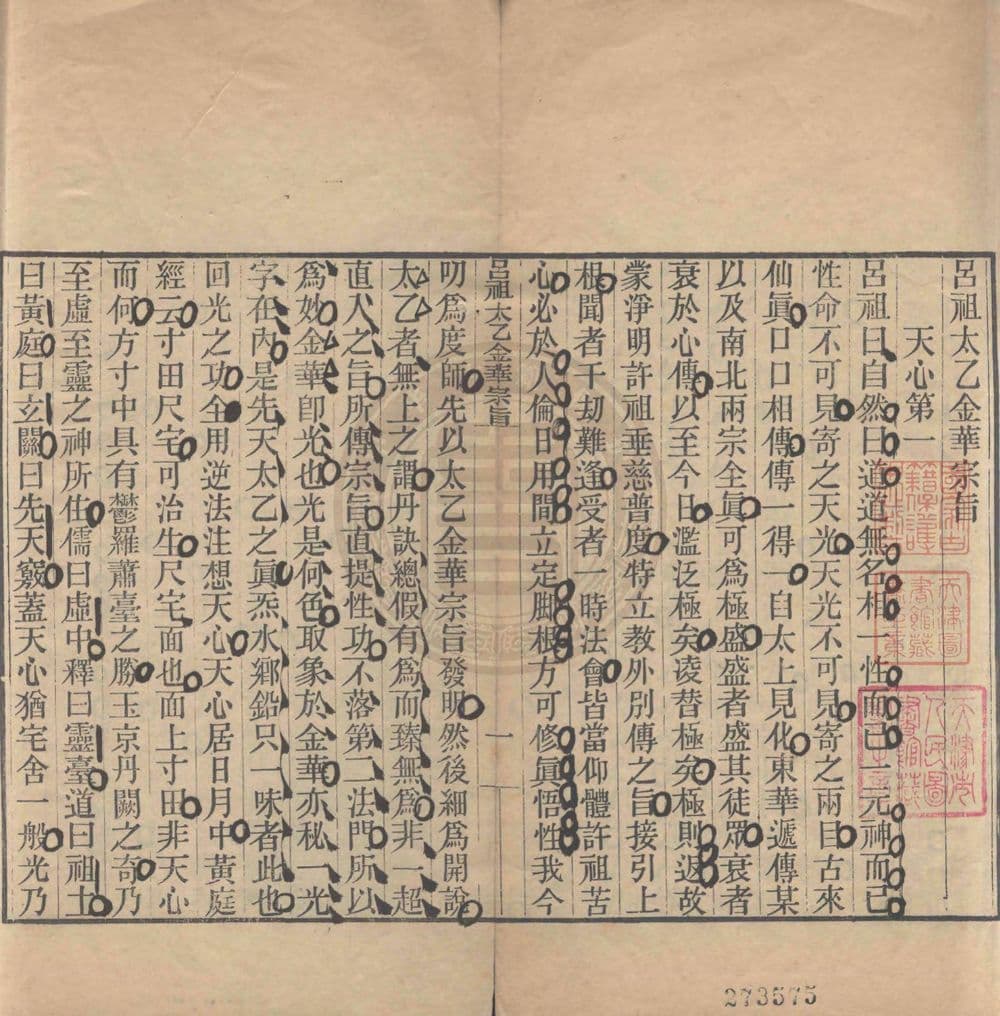
X
The Secret of the Golden Flower (Taiyi jinhua zongzhi 太乙金華宗旨), ch. 1
17th–18th century · attributed to Lü Dongbin, by spirit-writing
性命不可見,寄之天光;天光不可見,寄之兩目。……金華即光也。……回光之功,全用逆法,注想天心。天心居日月中。
Nature and life cannot be seen: they are lodged in the light of heaven. The light of heaven cannot be seen: it is lodged in the two eyes. … The golden flower is the light. … The work of turning the light around goes against the current throughout: fix your thought on the heart of heaven. The heart of heaven lies between the sun and the moon [that is, between the two eyes]. AI
A Daoist manual of inner alchemy. Its whole method is in one phrase, huiguang 回光, turning the light around: the light by which we see and think is turned back toward its source, 'the heart of heaven' between the eyes. Like Republic 518c–d it gives no new faculty; it turns one that is already there. That likeness is a resonance: no contact between these traditions is claimed. AI
Further passages and notes
光不在身中,亦不在身外。山河大地,日月照臨,無非此光,故不獨在身中。……所以一回光,天地山河一切皆回矣。人之精華,上注於目,此人身之大關鍵也。
The light is not in the body, nor is it outside the body. Mountains and rivers and the great earth, all that sun and moon shine on, are nothing but this light; so it is not only in the body. … And so, turn the light around once, and heaven and earth, mountains and rivers, all turn around with it. A person's finest essence rises and pours into the eyes: this is the great hinge of the body. AI
ch. 3 回光守中 'Turning the light around and keeping to the centre', leaf 5 (same print) ↗
The text. A manual of Daoist inner alchemy received through spirit-writing in the name of the immortal Lü Dongbin; the title is first attested in 1668, and several versions circulated, tied to different lineages (Monica Esposito counts six major editions). The print shown here opens 呂祖曰:自然曰道 ('Patriarch Lü said: what is so of itself is called the Way'), as does the text on zh.wikisource; the version in Min Yide's Gushu yinlou cangshu (1904) opens differently (祖師曰:天心者,三才同稟之心). Which edition this undated Qing print belongs to was not determined.
In Europe. Richard Wilhelm translated it into German as Das Geheimnis der goldenen Blüte (1929), with a commentary by C. G. Jung; Cary F. Baynes's English of both followed in 1931. Most Western readers met it through Jung's psychology, which is a reception with its own aims, not the text's frame. Our translation is made from the Chinese and does not follow theirs.
Why here. The path's Greek half turns the soul's eye toward its source; its Arabic half places that eye in the heart. This text, from another world, also finds a light that 'cannot be seen' lodged in seeing itself and asks for it to be turned back. The differences are as real as the likeness: here the turning is a discipline of breath, body and gaze, and the 'golden flower' is an inner elixir. No one is claimed to have learned from anyone.
AI
Read it at the source ↗On: Lü zu Taiyi jinhua zongzhi, ch. 1 天心 (leaf 1) and ch. 3 回光守中 (leaf 5), read on the Tianjin Library's Qing woodblock print (National Library of China scan on Wikimedia Commons, pdf pp. 2 and 6). Punctuation ours. The zh.wikisource transcription (marked 50% proofread) follows the same recension but differs in places (e.g. 一位 for the print's 一味).