About the prayer and its author
الصلاة المشيشية
ʿAbd al-Salām ibn Mashīsh (d. 622/1225)
AI This page is an AI summary of the sources it names, written from page images and, where marked, machine transcripts. No person has reviewed it yet. Reports of what the saint did are labelled as tradition; what the sources say is given with its page.
The prayer (13th c.) is public domain; Ibn Kīrān's edition (Bārūd, Abu Dhabi 1999) is the base text and its own typography is UNVERIFIED · our collation · AI English and notes marked, unreviewed · recordings and modern studies cited and linked only
Textual notes: witnesses, readings, what is still open
The man
Our main source is al-Kūhin al-Fāsī, Ṭabaqāt al-Shādhiliyya al-kubrā (Beirut: Dār al-Kutub al-ʿIlmiyya; the 2020 printing), pages as printed. It is a late collection of lives and is itself a devotional source, so each report below is given as the book gives it.
Name and date. His father's name is disputed: Bashīsh, who became known as Mashīsh, or Sulaymān nicknamed Mashīsh. Reports of his death give 622 and 625 (AH), and the first is better known (p. 59, the editor's note, which cites al-Aʿlām). al-Kharrūbī reports that some shaykhs he met said Mashshīsh, with a doubled shīn. Ibn ʿĀbidīn's thabat writes Bashīsh and says it is given with bā' or with mīm (Ibn Kīrān, introduction, p. 6).
His death. Kūhin (p. 26) quotes Abū l-ʿAbbās al-Mursī, with no chain:
ومات الشيخُ عبدُ السلام بن مشيش رضي الله عنه مقتولاً، قتله ابن أبي الطواجن ببلاد المغرب.
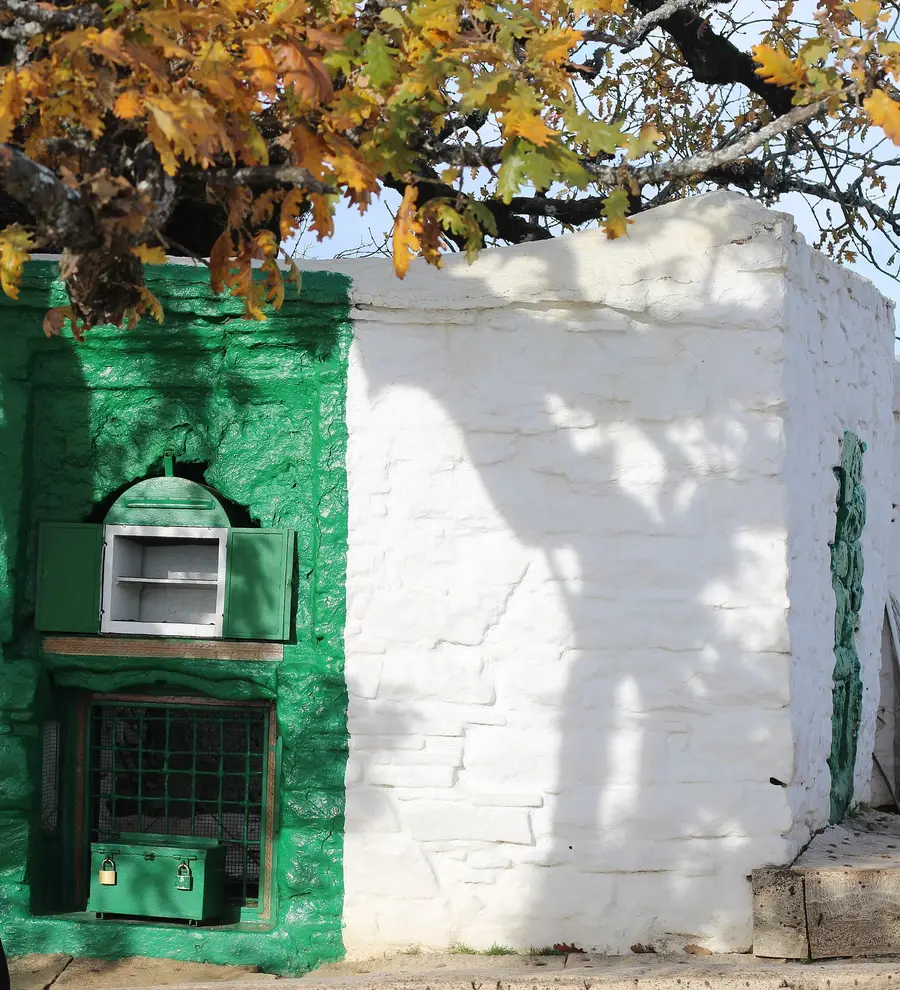
That is: he died killed, and Ibn Abī al-Ṭawājin killed him in the lands of the Maghrib. On p. 60 the book says he died a martyr and was buried at his place on Jabal al-Aʿlām at the port of Tétouan, with a maqām, a tomb and a short dome built over him. No motive is given. (The name is printed «الطواجن» here and «الطواجين» in Ibn Kīrān's edition.)
The shrine. Kūhin (p. 60) lists the shrine among the places where prayer is answered and likens its standing in the Maghrib to al-Shāfiʿī's in Egypt, quoting an unnamed poet: ask by the secret of Ibn Mashīsh what you wish and you will get it, though it be far from you. This tells us what visitors believed, which is how we use it.
His pupil on him. Asked once who his shaykh was, al-Shādhilī answered (p. 26) that he used to be affiliated with Shaykh ʿAbd al-Salām ibn Mashīsh, that he was now affiliated with no one, and that he swam in ten seas: Muḥammad, Abū Bakr, ʿUmar, ʿUthmān, ʿAlī, Jibrīl, Mīkāʾīl, ʿAzrāʾīl, Isrāfīl and the Greatest Spirit. The sentence names Ibn Mashīsh as the affiliation he used to claim and speaks of what lies beyond him. Kūhin gives it with no chain, and we have not found an earlier source for it.
Tradition says. Kūhin (pp. 59 to 60) also reports that at his birth ʿAbd al-Qādir al-Jīlānī heard a voice telling him to lift his foot from the people of the Maghrib, for their pole had been born that day; that as an infant he refused his mother's breast in Ramadan until the call to sunset prayer; and that he was the teacher of the three poles, al-Dasūqī, al-Badawī and al-Shādhilī. These are devotional claims, and we have no second source for the last of them. In the same entry (p. 60) ʿAbd al-Raḥmān al-Zayyāt comes to him as a boy of seven, says “I am your shaykh” and “I am your intermediary (wāsiṭa) in every state and station”. The word is the one in line 9 of the prayer; we do not say the prayer refers to this encounter.
The chain, as al-Kūhin gives it
On p. 198 al-Kūhin traces a line of transmission from al-Shādhilī back through his shaykh. It runs:
- Abū l-Ḥasan al-Shādhilī
- ʿAbd al-Salām ibn Mashīsh
- ʿAbd al-Raḥmān al-Zayyāt
- Taqī al-Dīn al-Faqīr
- Fakhr al-Dīn
- Nūr al-Dīn
- Tāj al-Dīn
- Shams al-Dīn
- Ibrāhīm al-Baṣrī
- Abū l-Qāsim Aḥmad b. Marwān
The quoted chain continues past the last name. This chain has no Abū Madyan in it, and Ibn Mashīsh's teacher is al-Zayyāt. Some later accounts of the Shādhilī line add Abū Madyan; we have not traced which, so this page gives al-Kūhin's chain as he gives it. One more difficulty is the book's own: on p. 61 it dates Taqī al-Dīn al-Nahrawandī to 594 and says al-Zayyāt died in the fifth century, and those two statements sit badly together.
How the prayer travelled
In a scholar's record of what he had received. The editor of Ibn Kīrān's commentary prints, in his introduction (pp. 6 to 7), a passage from the thabat of the Ḥanafī jurist Ibn ʿĀbidīn, author of the Ḥāshiya. Ibn ʿĀbidīn lists the prayer with the incipit «اللهم صل على من منه انشقت الأسرار» and says it was set down by Aḥmad al-Nakhlī and his pupil al-Minīnī in their own thabats. The passage then says that al-Nakhlī took it from Aḥmad al-Bābilī and ʿĪsā al-Thaʿālibī, who told him to read it once after the dawn prayer and once after sunset. So the times belong to al-Nakhlī's teachers, and Ibn ʿĀbidīn's thabat carries them. The passage adds that in some marginal notes it is read three times, after dawn, after sunset and after the night prayer. Where the quotation ends is not marked by the editor.
In prayer books. The editor (p. 7) says some great Shādhilī shaykhs added «زيادات» to it and made it a daily litany. In a 1996 talk by Vincent Cornell (we have only its automatic captions, not yet checked by ear), the closing invocations of copies of al-Jazūlī's Dalāʾil al-khayrāt, this prayer among them, were added by later Shādhilī and Qādirī shaykhs.
Sung. We found settings in Morocco (an Āla recording by al-Muntaṣir al-ʿImrānī), in Malaysia and Indonesia (the Dewan Selawat groups; Ustaz Neezam al-Banjari) and in Turkey, where the title is Beşiş salâtı, matching Ibn ʿĀbidīn's spelling Bashīsh. They differ in what they add and leave out; the textual notes list how, and the recordings are linked under Companions below. Their words come from machine transcripts.
Commentaries
The prayer has many commentaries; al-Timsamānī's opening pages list two groups of commentaries, eleven and nine. These are the ones we have met, with what we have read of each.
Aḥmad ibn ʿAjība (d. 1224/1809)
commentary on the prayer; best known of the group
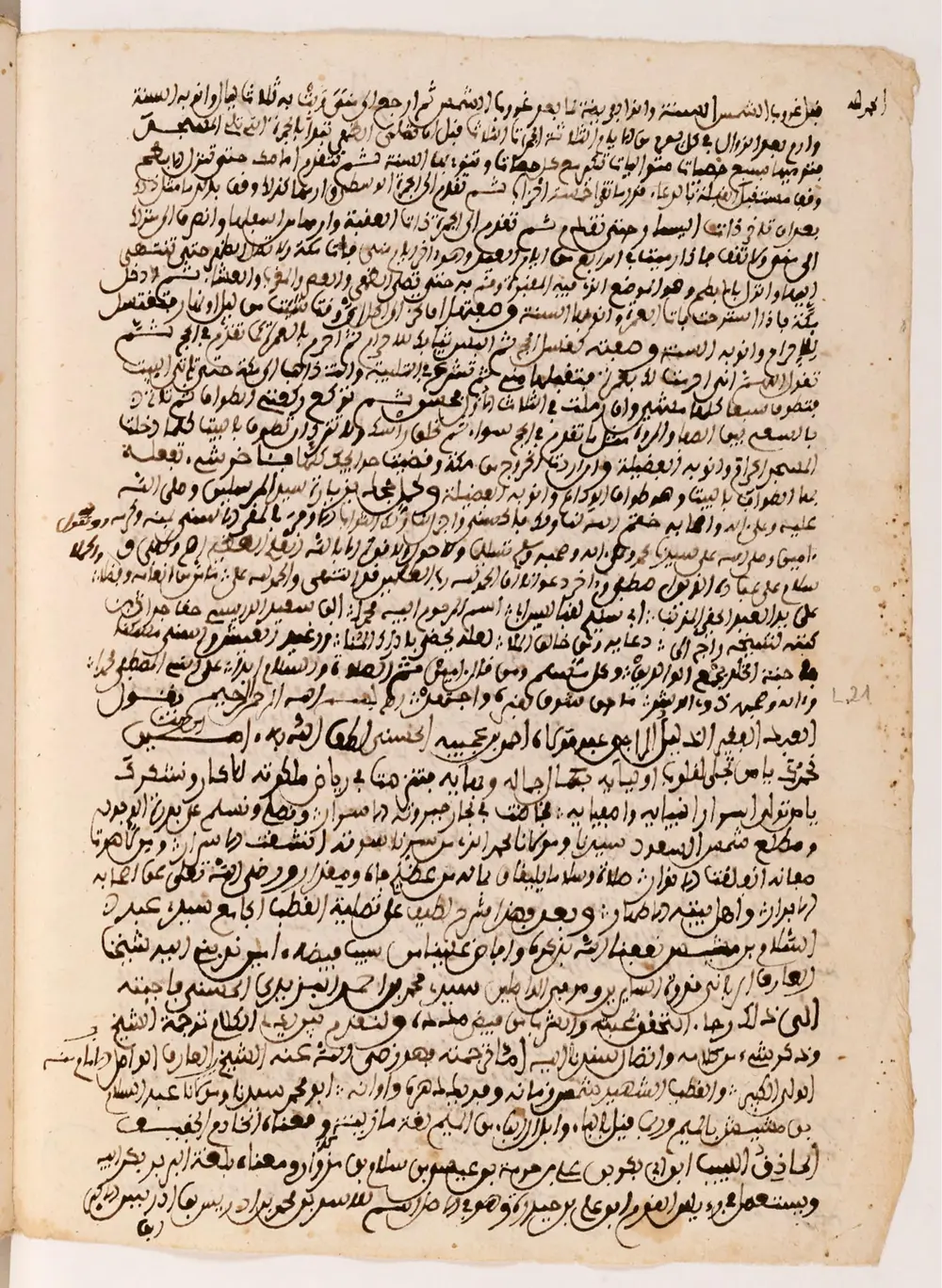
The manuscript BULAC MS.ARA.1927 is open on archive.org. English: Fitzgerald, in Two Sufi Commentaries (Fons Vitae, 2015), in copyright and not used here. We have not yet read the leaf.
Ibn Kīrān (d. 1227/1812)
Sharḥ al-Ṣalāt al-Mashīshiyya; our base text and the commentary quoted most in the notes
Ed. Bārūd (Abu Dhabi 1999), scan on archive.org.
al-Timsamānī (as catalogued)
Riyāḍ al-raqāʾiq wa-ḥiyāḍ al-ḥaqāʾiq ʿalā ṣalāt al-quṭb al-fāʾiq
DKI, Beirut 2017, scan on archive.org. The colophon reads the end of Shaʿbān 1239 AH; the attribution is not settled (the running header names al-Ḥamūmī).
al-Kharrūbī
Sharḥ taṣliyat Ibn Mashīsh, known to us through al-Kūhin (p. 59, note); manuscript at Rabat (d 245)
Not online as far as we found.
Ibn Zakrī
al-Ilmām wa-l-iʿlām; cited by al-ʿUmarī for the text and named by al-Ḥarrāq
Not yet read by us.
al-Ḥarrāq, al-Bannānī, al-Wazzānī, al-Mrīr
named as commentators by al-Ḥarrāq in the talk linked below (machine transcript, to be checked by ear)
Not yet read by us.
Saʿd al-Dīn al-Ḥamawī, Ismāʿīl Ḥaqqī Bursawī, al-Suhaymī, Luṭf Allāh
further commentaries; two Leipzig manuscripts (Cod. arab. 2281 and 2320) carry some
Leads only; none opened.
Further reading, in copyright and cited only: Titus Burckhardt, “The Prayer of Ibn Mashīsh”, Studies in Comparative Religion 12 (1978).
Objections and answers
We looked for named critics of the prayer's wording and found two sources. Neither discusses a specific line. One is a footnote and the other a short fatwa, and both object to the prayer as a whole. We found nothing by a critic on the lines about the intermediary or the greatest veil. The objections below sit beside Ibn Kīrān's comment on the line the critics' worry comes nearest to, «أوحال التوحيد» (line 21), because both sides then speak of the same words. That does not make it an exchange: no critic here answers Ibn Kīrān, and he wrote two centuries before them.
ʿAbd al-Hādī b. ʿAwaḍ al-ʿUmarī (2019)
A doctoral thesis on Ibn ʿAjība, Ārāʾ Ibn ʿAjība al-ʿaqadiyya, ʿarḍan wa-naqdan (Riyadh, Imam Muhammad b. Saud Islamic University; 1st ed. 2019 CE). On p. 803, note 3, in the section on Ibn ʿAjība's attitude to the Sufi greats, he comments on Ibn ʿAjība's praise of Ibn Mashīsh and quotes the opening and the pair «وزج بي في بحار الأحدية وانشلني من أوحال التوحيد». The charge is general:
وهي صلاة بدعية مليئة بعقائد الصوفية من وحدة الوجود، والغلو في الرسول صلى الله عليه وسلم
He calls it an innovation full of Sufi doctrines of the unity of being (waḥdat al-wujūd) and of exaggeration about the Messenger, and says the Sufis ascribe merits to it to keep people reciting it, quoting the promised merits: a reader is “expanded of breast” and helped against all enemies. He gives the page on Shamela. He asserts the charge and does not argue it, ties it to no single line, and his target is Ibn ʿAjība's commentary tradition as much as the prayer. He does not refute Ibn Kīrān.
Islamweb, fatwa no. 61693 (2005)
An unsigned answer from the Islamweb fatwa centre, dated 25 Rabīʿ al-Awwal 1426 (3 May 2005), titled «الصلاة المشيشية وصيغ الصلاة». A reader asked about prayers on the Prophet ascribed to named people, such as this one, with great promised rewards and no hadith behind them. The fatwa says:
ولعله قد اطلع على ألفاظها وما تضمنته كلماتها مما هو منكر إلا أن يتمحل له بضروب التأويل
فهذه أشياء مبتدعة يجب الحذر منها والابتعاد عنها
The first sentence is hedged (“perhaps he has seen its wording and what its words contain, which is objectionable unless forced into some interpretation”) and is addressed to the questioner. The second calls such things innovations to be avoided, because a fixed reward for a fixed act needs sound proof. The fatwa then says that prayers on the Prophet are a wide field if they carry nothing against the law and the reciter does not believe in a fixed reward. It quotes no line of the prayer and analyses none. The first sentence allows that the wording might be read through taʾwīl, though it calls that forced. It is a plain statement of the objection from a mainstream fatwa site, and it makes no claim to a scholarly refutation.
Ibn Kīrān on «أوحال التوحيد»
Ibn Kīrān (printed pp. 198 to 201, read from the page images) takes the request in three ways, which the notes on line 21 also give.
- On p. 198, under the heading «وانشلني من أوحال التوحيد»: it is courtesy in asking to enter the seas of Oneness, and a guard («واحتراز») against the bad beliefs that overtook those without divine support:من الناس من لبس عليه الأمر فقال بالحلول والاتحاد, that is, some were confused and spoke of indwelling and union.
- On p. 199: «زج بي في بحار الأحدية» asks for the state of the enraptured, who argue from God to things; «انشلني من أوحال التوحيد» asks release from the doubts that befall travellers who argue from things to God.
- On p. 201: release from witnessing tawḥīd as coming from oneself, since one who does so is still separate, aware of one who unifies and one who is unified.
The worry of al-ʿUmarī, unity of being, is close to the one Ibn Kīrān's first reading guards against, indwelling and union. That is a closeness of topic, and Ibn Kīrān does not use al-ʿUmarī's term. A defender writing today, Aḥmad al-Ṭalḥī (Youm7, 24 July 2025), is reported to read the phrase as a pointer to deviations that hide under the name of tawḥīd; we have the report from a search summary and have not read the article.
The line about the intermediary, «لولا الواسطة» (line 9), has no critic on the page. Its defenders are Ibn Kīrān and al-Timsamānī, whose glosses are in the notes on that line.
Companions
Recitations, commentaries, lectures, editions and references around this text, by other people. They are linked out, not copied: the recordings belong to their reciters and platforms, and none of them is this reader's own (AI) audio. Links checked 2026-11-03.
Recitations · 5
Ṣalāt Ibn Mashīsh, Āla (samāʿ) setting · YouTube ↗
al-Muntaṣir al-ʿImrānī (performer) · whole text
Rights: linked, not embedded · a sung or recited setting: the words are known only from a machine transcript, so wording differences are not counted until someone listens · Moroccan classical register, 2017, about 6 minutes. Starts at line 1; ends at the blessing verse.
Ṣalāt Ibn Mashīsh, with the blessing verse and the taʿawwudh first · YouTube ↗
Saad Temsamani (reciter) · whole text
Rights: linked, not embedded · a sung or recited setting: the words are known only from a machine transcript, so wording differences are not counted until someone listens · About 7 minutes. Closes on the Ṣāffāt verse, not the blessing verse.
Selawat Masyisyiyah (Malay-language channel) · YouTube ↗
Sodeeq / Dewan Selawat Raudhah Muhibbin (group) · whole text
Rights: linked, not embedded · a sung or recited setting: the words are known only from a machine transcript, so wording differences are not counted until someone listens · About 9 minutes; repeats several clusters of lines and adds invocations.
Selawat Masyisyiyah · YouTube ↗
Ustaz Neezam al-Banjari with Babul Mustofa (performers) · whole text
Rights: linked, not embedded · a sung or recited setting: the words are known only from a machine transcript, so wording differences are not counted until someone listens · Indonesian and Malay setting; the transcript of this recording is badly garbled, so only clear repeated readings were used.
Seyyid Abdüsselâm ibni Beşiş salâtı · YouTube ↗
Lâlegül TV (channel) · whole text
Rights: linked, not embedded · a sung or recited setting: the words are known only from a machine transcript, so wording differences are not counted until someone listens · Turkish setting with spoken commentary in Turkish, which was not transcribed. Sung text from line 5.
Commentaries & lectures · 4
Ibn ʿAjība, commentary on the prayer («شرح على تصلية القطب بن مشيش»), manuscript · BULAC via Internet Archive ↗
Aḥmad ibn ʿAjība (author (d. 1224/1809)); unnamed copyist (scribe, undated) · whole text
Rights: public domain / open · access: open images (Public Domain Mark); leaf f. 169v · the best-known commentary: not yet read by us: the leaf is dense Maghribī script and needs the full-resolution images and a reader · BULAC (Paris), MS.ARA.1927. The page is shown on the About page. English: Fitzgerald, in Two Sufi Commentaries (Fons Vitae, 2015), in copyright, not used here.
Talk on Ibn Mashīsh and the prayer (Arabic) · YouTube (Dar Assamaa) ↗
al-Tihāmī al-Ḥarrāq (speaker) · whole text
Rights: the owner's channel · a talk by a speaker who knows the commentary tradition (he lists its commentators): not independently checked; our reading of it comes from a noisy machine transcript · 2015, about 9 minutes. Licence given as CC BY in the video's listing, not confirmed with the channel. Embedded on the About page.
Talk with a passage on Ibn Mashīsh in English · YouTube ↗
Casewit (first name to be confirmed) (speaker) · whole text
Rights: linked, not embedded · a talk by a specialist: from automatic captions only; check by ear before quoting · The passage is about a minute long and describes the saint as a mountain hermit with a family and al-Shādhilī as his best-known student.
Lecture on Dalāʾil al-khayrāt and its additions (1996) · YouTube ↗
Vincent J. Cornell (speaker) · whole text
Rights: linked, not embedded · a specialist, from a 1996 talk: automatic captions only, not yet checked by ear · In the passage he says the closing invocations in copies of the Dalāʾil, this prayer among them, were added by later Shādhilī and Qādirī shaykhs.
Editions & translations · 2
Sharḥ al-Ṣalāt al-Mashīshiyya (Ibn Kīrān), with the prayer in the editor's introduction · Internet Archive ↗
al-Ṭayyib b. ʿAbd al-Majīd Ibn Kīrān (author (d. 1227/1812)); Bassām M. Bārūd (editor) · whole text
Rights: linked, not embedded · access: scan open on archive.org (rights in the modern edition unverified) · the base text of this page: read from the page images; the commentary's own lemmas correct the introduction's quotation in two places · Abu Dhabi: al-Majmaʿ al-Thaqāfī, 1999. The prayer is 13th century and public domain; the edition's typography is not confirmed free.
Riyāḍ al-raqāʾiq wa-ḥiyāḍ al-ḥaqāʾiq ʿalā ṣalāt al-quṭb al-fāʾiq (al-Timsamānī) · Internet Archive ↗
Muḥammad al-Mahdī al-Timsamānī (commentary as catalogued; the running header names Muḥammad Badr al-Dīn al-Ḥasanī al-Ḥamūmī) · whole text
Rights: linked, not embedded · access: third-party scan on archive.org · second printed witness: the matn is read from the page image, the commentary through machine text of the scan; the attribution and the 1239 AH colophon are not settled · Beirut: Dār al-Kutub al-ʿIlmiyya, 2017.
References · 3
R. Le Tourneau, «ʿAbd al-Salām b. Mashīsh», Encyclopaedia of Islam, 2nd ed., vol. 1 · Brill ↗
R. Le Tourneau (author) · the man
Rights: linked, not embedded · access: paywalled · standard reference: listed, not yet read by us
Realm of the Saint: Power and Authority in Moroccan Sufism · University of Texas Press ↗
Vincent J. Cornell (author) · the man and his place in Moroccan Sufism
Rights: linked, not embedded · access: library or purchase · standard scholarly study: listed, not yet read by us
Identity, Place, Space, and Rhymes During a Pilgrimage to the Shrine of Moulay Abdessalam, Morocco · Journal of Religion in Africa 48(3) (2018), pp. 204 to 230 ↗
Sarali Gintsburg (author) · the shrine
Rights: linked, not embedded · access: journal; abstract read only · peer-reviewed article: abstract read, not the article
A talk on the prayer, from its own channel
al-Tihāmī al-Ḥarrāq (Dar Assamaa, 2015, in Arabic, about nine minutes). The listing gives the licence as CC BY; we have not confirmed that with the channel. Our notes from it come from a noisy machine transcript and need a listener's check.
Versions
6 layers, each with its licenceThe original
Ibn Kīrān, Sharḥ al-Ṣalāt al-Mashīshiyya: the prayer as quoted in the editor's introduction, and the lemmasIbn Kīrān (al-Ṭayyib b. ʿAbd al-Majīd, d. 1227/1812), Bassām M. Bārūd · Abu Dhabi 1999UNVERIFIED
- By
- Ibn Kīrān (al-Ṭayyib b. ʿAbd al-Majīd, d. 1227/1812) (commentator); Bassām M. Bārūd (editor) · Abu Dhabi 1999
- Source:
- Abu Dhabi: al-Majmaʿ al-Thaqāfī, 1999; the prayer on printed pp. 5 to 6, the lemmas through the commentary and the table of contents · link ↗
- In the reader:
- The Arabic of the 39 clauses, read from the page images; Ibn Kīrān's glosses paraphrased in the notes with their printed pages
- Licence:
- UNVERIFIED: the prayer itself (13th century) is public domain; the rights in this modern edition's typography and apparatus are not confirmed. Only the prayer's wording is used, not the edition's apparatus
- Notes
- Its introductory quotation drops «ولا أجد» and «وانصرني بك لك»; Ibn Kīrān's own lemmas in the same book carry them, and our text follows the lemmas.
- UNVERIFIED:
- The licence of the 1999 edition's typography and the editor's introduction.
al-Timsamānī, Riyāḍ al-raqāʾiq wa-ḥiyāḍ al-ḥaqāʾiq ʿalā ṣalāt al-quṭb al-fāʾiqal-Timsamānī (as catalogued) · Beirut 2017UNVERIFIED
- By
- al-Timsamānī (as catalogued) (commentator) · Beirut 2017
- Source:
- Beirut: Dār al-Kutub al-ʿIlmiyya, 2017; scan on archive.org · link ↗
- In the reader:
- The printed matn is a witness in the collation; his glosses on «الموسوط», «انشقت/انفلقت», «بتحقيق» and the closing are paraphrased in the notes
- Licence:
- UNVERIFIED: the commentary is old (its colophon reads end of Shaʿbān 1239 AH); the rights in this modern edition are not confirmed
- Notes
- The matn is read from a page image; the commentary through machine text of the scan.
- UNVERIFIED:
- Whether the commentary is al-Timsamānī's or al-Ḥamūmī's (the running header names al-Ḥamūmī). The licence of the 2017 edition.
Web copies of the Arabic (NU Online, İslam ve İhsan, Sonora.id, Harvard blog archive)read 2026-11-03UNVERIFIED
- Source:
- quran.nu.or.id/wirid/shalawat/shalawat-masyisyiyah; islamveihsan.com/abdusselam-b-mesisin-okudugu-salavat.html; sonora.id; archive.blogs.harvard.edu/sulaymanibnqiddees (2012)
- In the reader:
- As weak witnesses in the textual notes (marked [web])
- Licence:
- UNVERIFIED: the website copies' own rights are not stated; only variant readings are recorded, no text is copied
Our edition
Our collation: the established Arabic text, 39 clauses in 7 movements, with its apparatusThe Mashraba Reader · 2026-11-03Our work
- By
- The Mashraba Reader (collation of the witnesses above; clause breaks follow Ibn Kīrān's lemma divisions) · 2026-11-03
- Source:
- app/src/content/mashishiyya/prayer.json and apparatus.json, built by scripts/mashishiyya.py
- In the reader:
- The Arabic of the reader page; the textual notes page
- Licence:
- Ours (collation of a public-domain text)
- Notes
- A collation of modern prints and recordings; no manuscript of the prayer was read. A working text, not a critical edition.
AI layers
English translation and notes, line by lineClaude (AI) · 2026-11-03AIOur work
- By
- Claude (AI) (translation and notes from the Arabic of the collation) · 2026-11-03
- In the reader:
- Beside the Arabic in the reader; amber AI badge
- Licence:
- Ours (AI, unreviewed)
- Made by:
- Claude Sonnet 5.5 (draft), Claude Opus 5.5 (review of wording), 2026-11-03 (English written fresh from the Arabic; no published English translation was used or echoed; notes summarise Ibn Kīrān and al-Timsamānī with page references; no person has reviewed it)
- Notes
- Several lines have more than one defensible reading and are marked in the reader as disputed.
Audio
Four sung settings and one talk, read as witnesses through machine transcriptional-Muntaṣir al-ʿImrānī; Saad Temsamani; Sodeeq / Dewan Selawat Raudhah Muhibbin; Ustaz Neezam al-Banjari; Lâlegül TV · variousCopyrighted: cited only
- By
- al-Muntaṣir al-ʿImrānī; Saad Temsamani; Sodeeq / Dewan Selawat Raudhah Muhibbin; Ustaz Neezam al-Banjari; Lâlegül TV (performers and channels) · various
- Source:
- YouTube: j-EPdKuXdww, 8f2LyLde1qk, 2LGk0oORjps, Uro8BRQvhZI, FpHU3OhlTdE · link ↗
- In the reader:
- Linked on the About page under Companions; what each adds or omits is in the textual notes
- Licence:
- Cited and linked only, never re-hosted
- Notes
- Transcribed by machine (Whisper large-v3-turbo); a transcript is a finding aid, and a garbled syllable is not counted as a reading. The audio was not kept.
✦ marks AI that no person has reviewed yet; ✧ marks AI reviewed by a named person. Copyrighted works are cited, never shown. All sources · How texts are established