Liu Zhi 劉智 · c. 1670–after 1724
Nature and Principle in Islam
天方性理
卷首・本經The Root Classic
Chapter 5 · How the two worlds part and meet, and heaven and human undifferentiatedly transformed
第五章 總述大小兩世界分合之妙義與天人渾化之極致
The Only One is not a number; every number is one. [Feiyin jing] In the beginning, Real Being governs the one and governs the numbers. The one is its substance; the numbers are its function. [Zhaowei jing] Substance and function undivided: this is called the Real One. Function arising from substance: this is called the Numerical One. Function turned back to substance: this is called the Embodied One. The three ones are not three: one, with three meanings. [same] The Real One initiates transformation, the Numerical One completes transformation, the Embodied One transforms transformation. [Daoxing tuiyuan jing] Initiating is by act: from substance, function becomes manifest. Completing is by mandate: first principle, then the sage. Transforming transformation is by compliance: advancing by knowing and seeing, until nothing lies between. [Daoxing tuiyuan jing] Transformation is like a circle: it reaches the end and returns to the beginning. [same] Transformation comes from the So-of-itself and in the end returns to the So-of-itself; the least departure from it is not the Root Suchness. [Yanzhen jing; Zhaowei jing] The Root Suchness has no attachment; it attaches to names and guises. Names and guises have nothing to rest on; they rest on consciousness. Consciousness is not constant: so it is said, all things perish. [Zhaowei jing; Feiyin jing] Therefore the ten thousand things perish only in their guises, not in their principle; and the principle is the Real. [Feiyin jing] Focus the eyes and you see one; let them wander and you see two. Cling to doubt and fall into obstacles, and every thing you see is illusion. [Zhaowei jing; Feiyin jing; Daoxing tuiyuan jing] What thing is not Real? What event is not real? [Zhaowei jing] Every thing is pure and whole; who says anything is partial or mixed? [Zhaowei jing; Feiyin jing] One mote of dust, one grain of millet: the whole substance, the Root Suchness. [Yanzhen jing] One breath out, one breath in: the measure of all time. [Feiyin jing; Daoxing tuiyuan jing] In the small see the great: heaven taken into a grain of millet. In the great see the small: heaven outside a mote of dust. [Yanzhen jing; Daoxing tuiyuan jing] Unroll its light and shade, and one breath is a thousand ages; roll up its hours, and a thousand ages are one breath. [Daoxing tuiyuan jing; Feiyin jing] The one returns to the Root Suchness, and heaven and human are transformed without division. Things and self return to the Real, and the Real One returns to the Real. [Feiyin jing; Zhaowei jing] Things are no obstacle to one another, and the human is not burdened by desire; each wondrous meaning shows itself, and the Root Suchness is seen. [Daoxing tuiyuan jing; Yanzhen jing] In the beginning it was real principle; now it is real guise. When real being and guise are seen together, seed and fruit are complete. [Yanzhen jing; Zhaowei jing]
惟一非數,是數皆一。〔費隱經〕厥初實有,統一統數。一者其體,數者其用。〔昭微經〕體用渾然,是名真一。由體起用,是名數一。返用歸體,是名體一。三一非三,一而三義。〔同上〕真一起化,數一成化,體一化化。〔道行推原經〕起化以為,從體著用。成化以命,先理後聖。化化以順,進以知見,盡於無間。〔道行推原經〕化如循環,盡終返始。〔同上〕化出自然,終歸自然。少不自然,即非本然。〔研真經〕〔昭微經〕本然無着,着於名相。名相無附,附於意識。意識無恆,故曰皆朽。〔昭微經〕〔費隱經〕是故萬物,只朽其相,弗朽其理,夫理即真。〔費隱經〕凝目視一,散目視二。着疑陷礙,見物皆幻。〔昭微經〕〔費隱經〕〔道行推原經〕物何非真,事何非實。〔昭微經〕物物純全,孰云偏駁。〔昭微經〕〔費隱經〕一塵一粟,全體本然。〔研真經〕一呼一吸,終古限量。〔費隱經〕〔道行推原經〕小中見大,天納粟中。大中見小,天在塵外。〔研真經〕〔道行推原經〕舒其光陰,一息千古。卷其時刻,千古一息。〔道行推原經〕〔費隱經〕一歸本然,天人渾化。物我歸真,真一還真。〔費隱經〕〔昭微經〕物無相礙,人無欲累。妙義各呈,本然見焉。〔道行推原經〕〔研真經〕初為實理,今為實相。實有相見,種果全焉。〔研真經〕〔昭微經〕
AIScan, p. 129–131Transcribed from the scan by AI (Claude), checked as described on the About page.
The diagrams of the Root Classic
Liu Zhi follows the five chapters with ten diagrams (略, omitted, in the Wikisource text). Shown here from the public-domain CADAL scan; the English titles are AI translations.
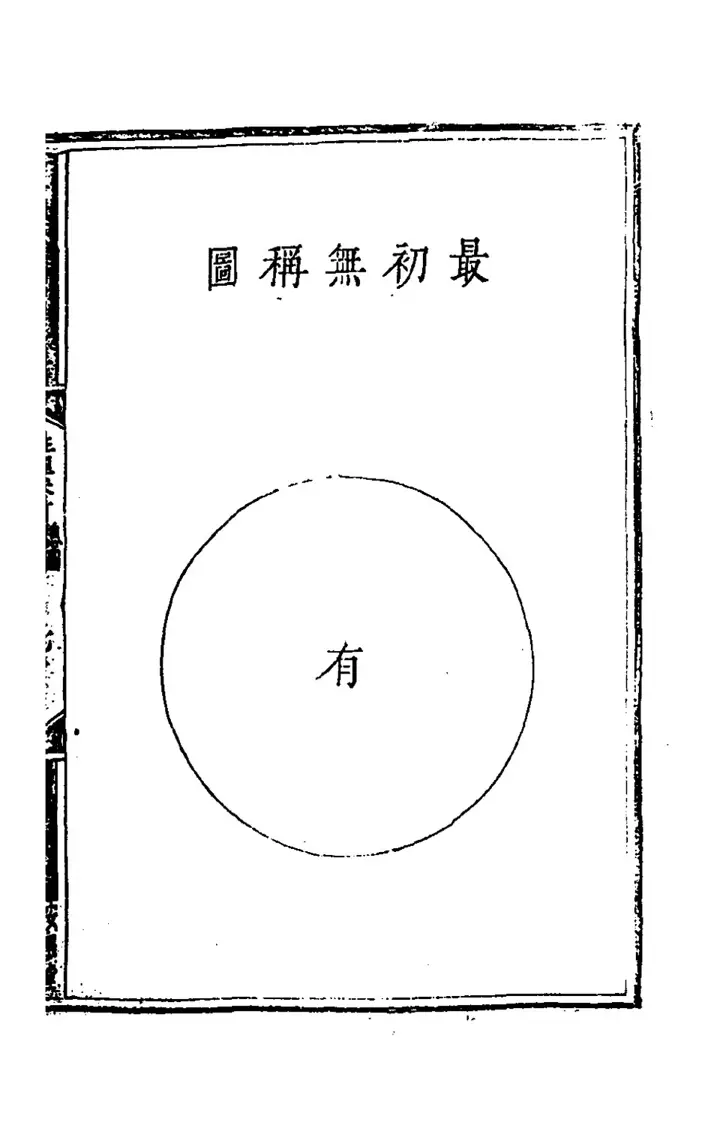
最初無稱圖
The Very Beginning without designation
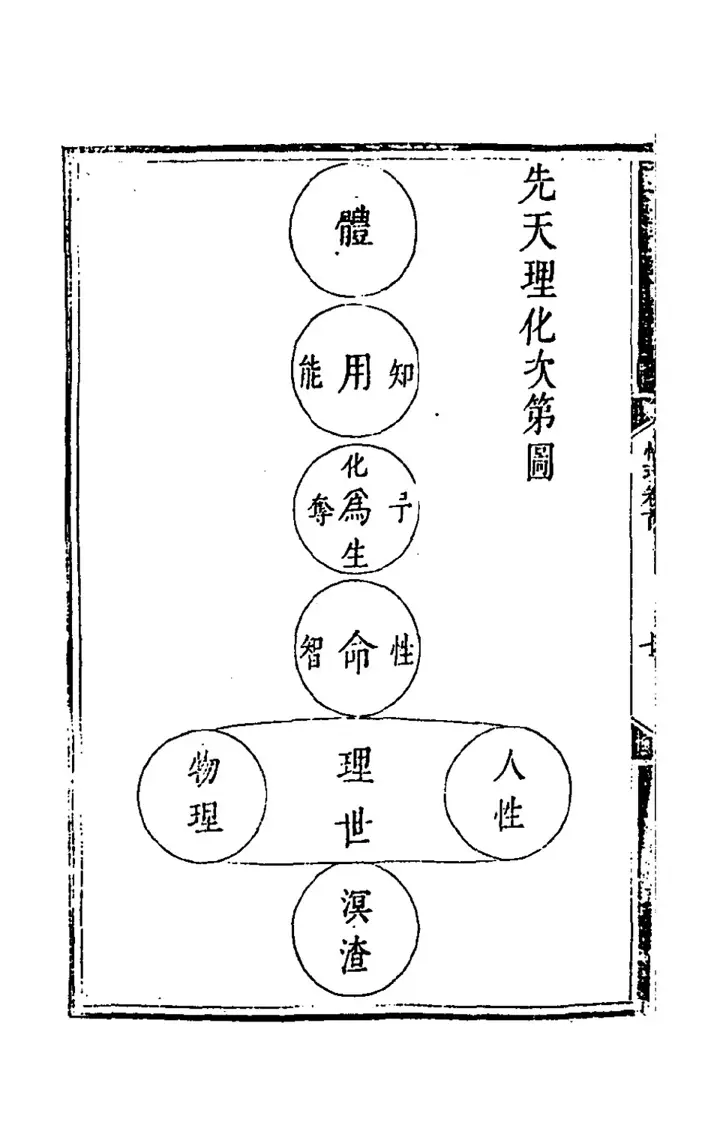
先天理化次第圖
Transformation by principle in the Former Heaven, in order
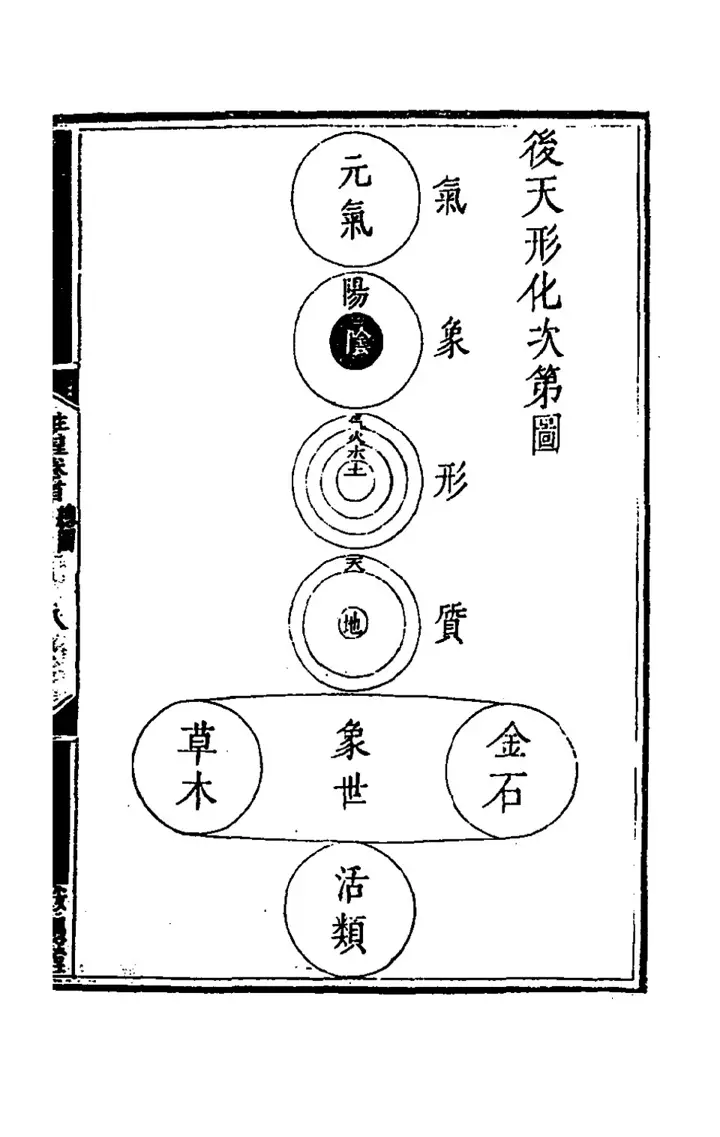
後天形化次第圖
Transformation by form in the Latter Heaven, in order
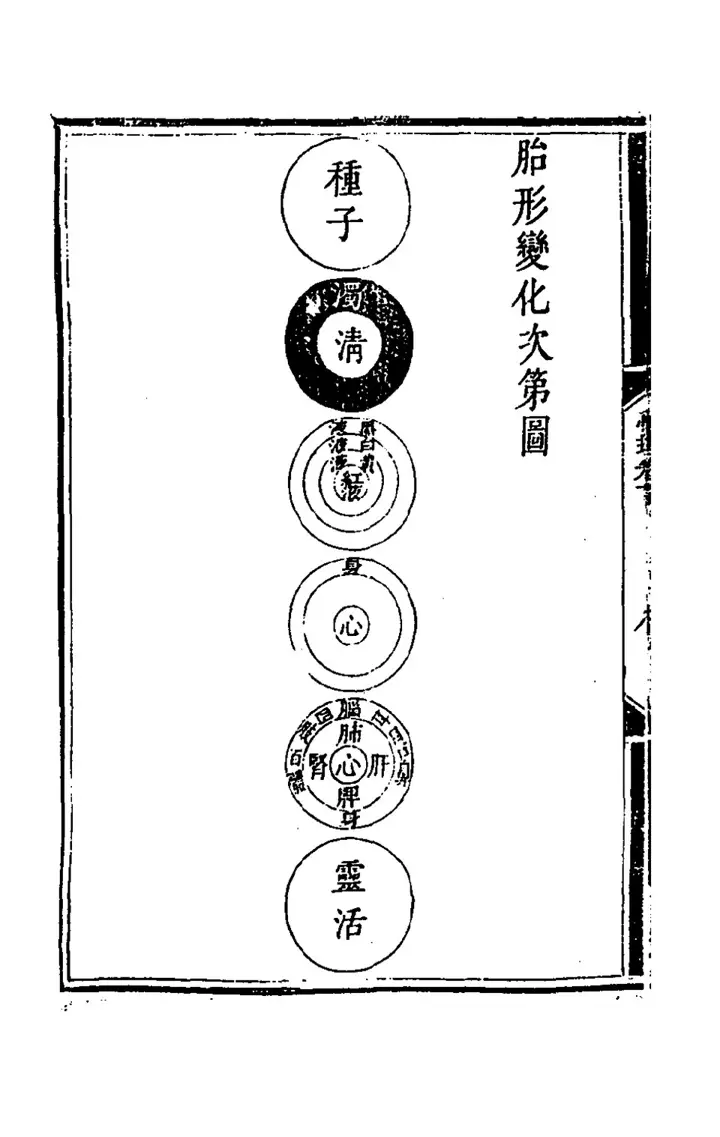
胎形變化次第圖
The embryo's transformations, in order
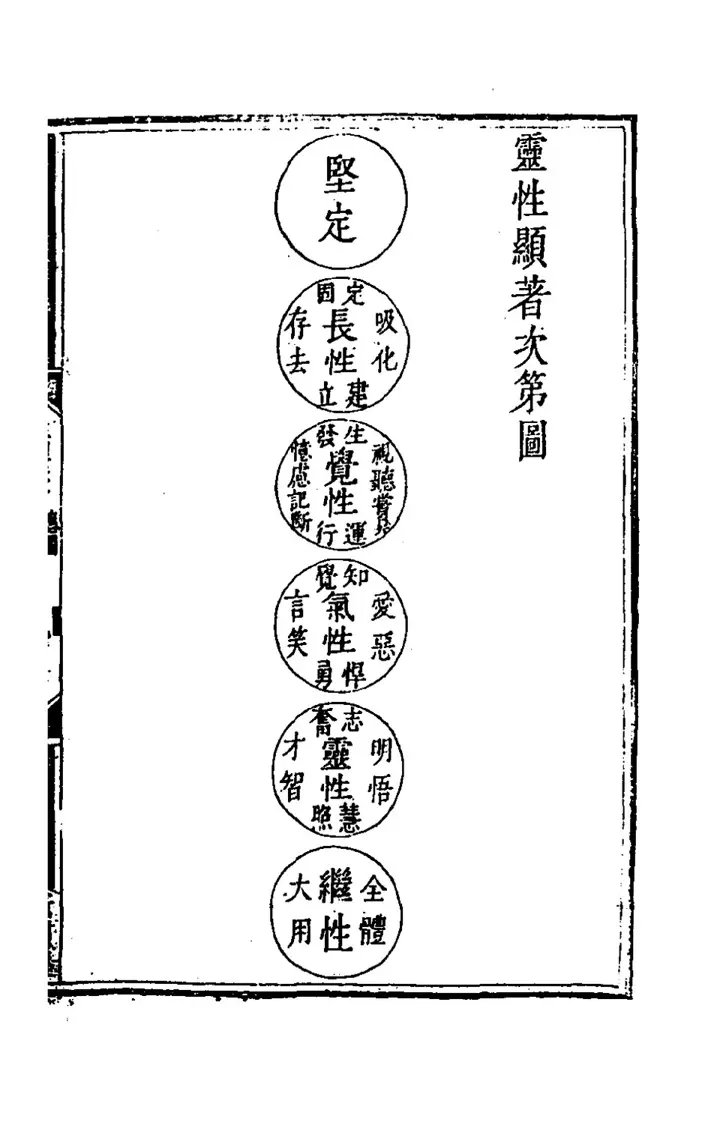
靈性顯著次第圖
The spiritual nature coming to light, in order
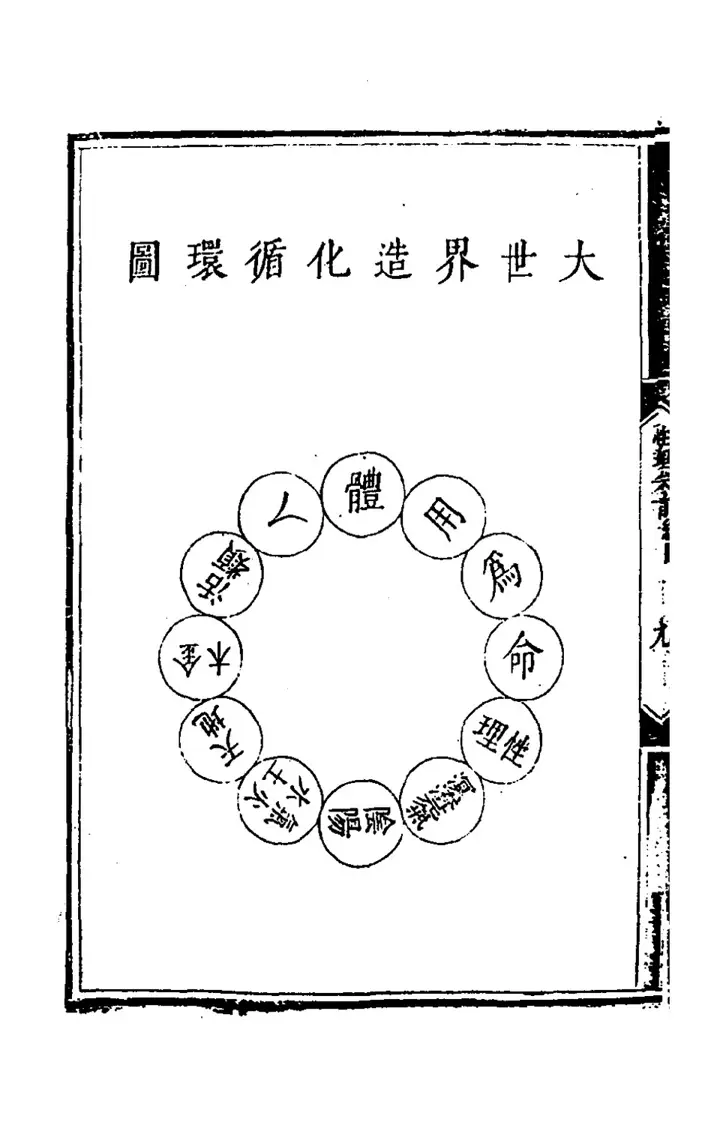
大世界造化循環圖
The cycle of creation in the great world
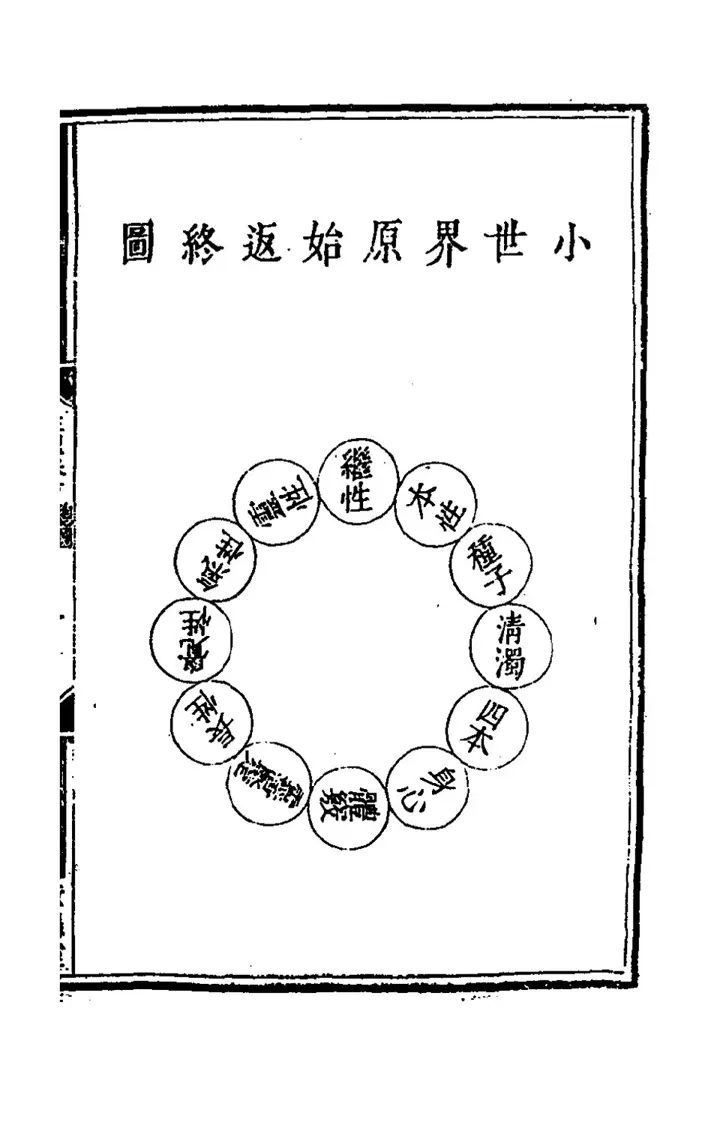
小世界原始返終圖
The small world: from the origin back to the end
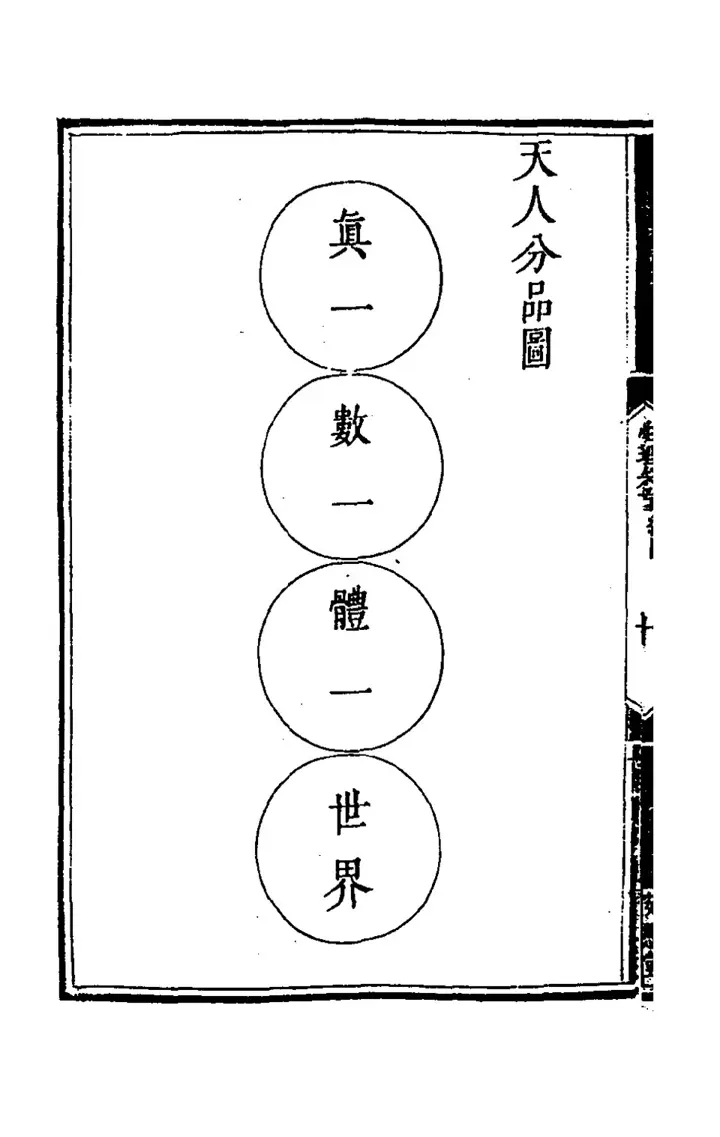
天人分品圖
Heaven and human, rank by rank
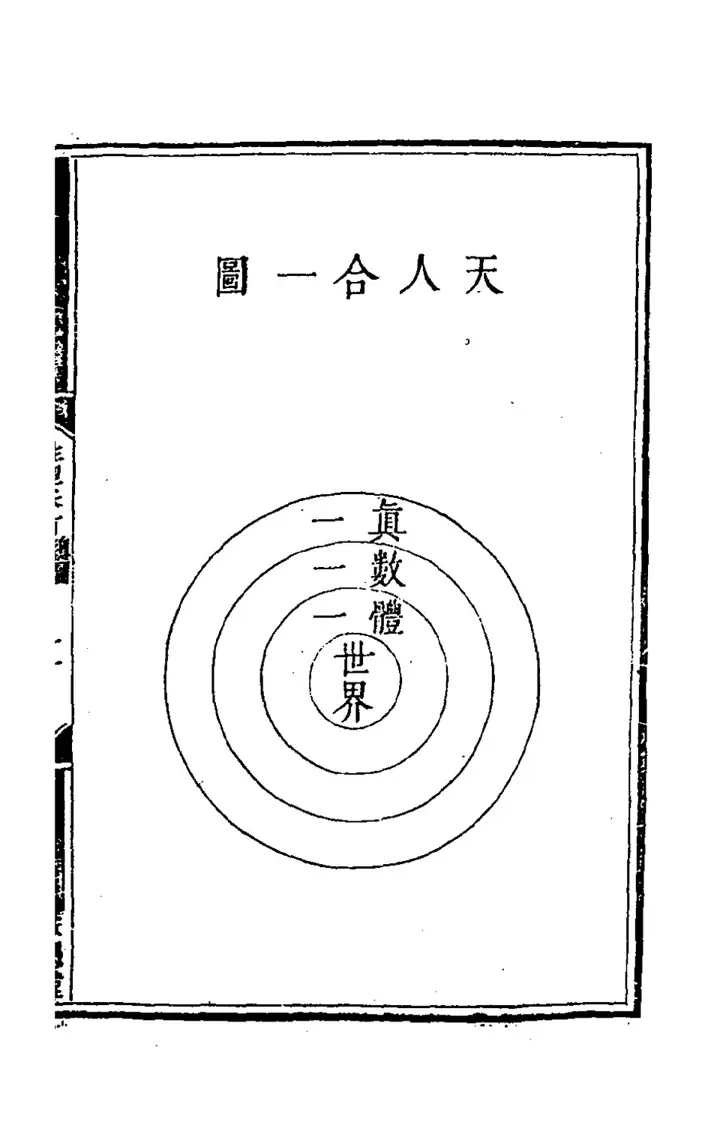
天人合一圖
Heaven and human as one
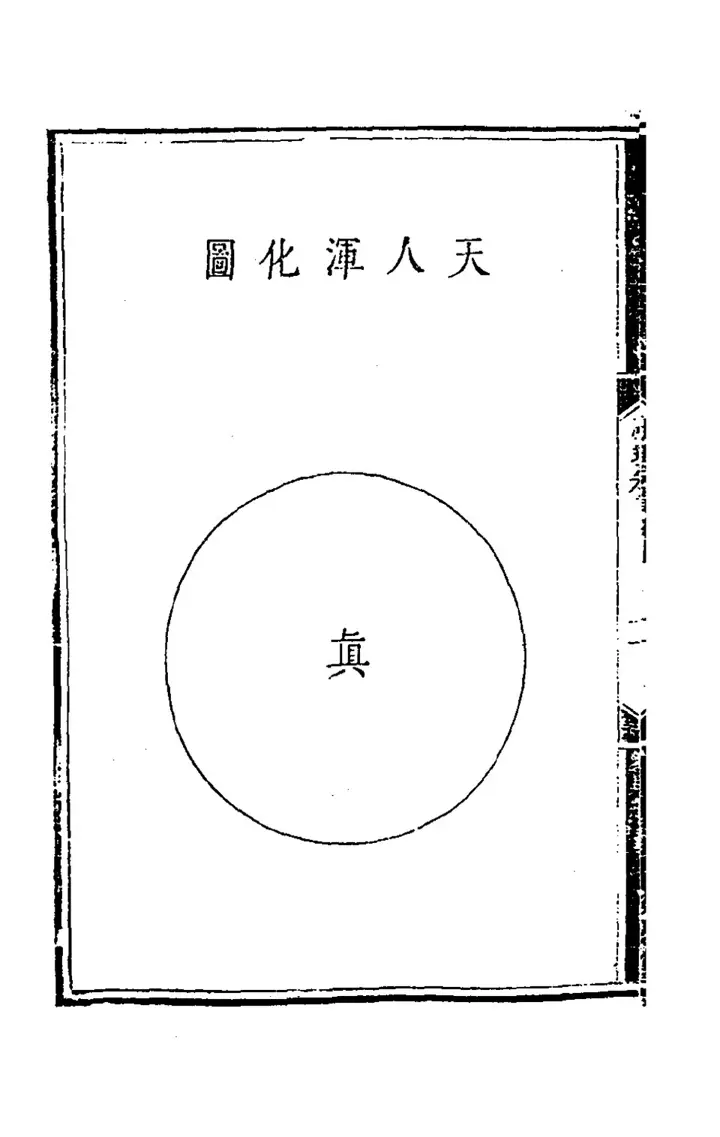
天人渾化圖
Heaven and human undifferentiatedly transformed
Key terms in this text
Each term's Arabic or Persian counterpart carries its grounding: the text itself, a published scholar, or AI. Tap one to find it in the text.
Where Liu Zhi cites Jāmī
Liu Zhi marks his sources line by line. The 昭微經 is Jāmī's Lawāʾiḥ: his own book list pairs it with 勒瓦一合, the Persian title in Chinese letters. For six of the eleven tagged lines Murata, Chittick and Tu (2009) name the Gleam in their notes (green); four more are AI proposals (amber), and one has no confident match. Whinfield's flash numbers follow Chittick's Gleams up to 26; all are to be checked against the Persian.
Chapter 5 一者其體,數者其用 Lawāʾiḥ, Flash 25
Gleam 25 (Flash XXV): the one Essence admits no number in itself, and appears as many through its manifold self-disclosures. (The earlier AI proposal, Flash XVII, fits the next tagged line instead.)
Murata et al. 2009, p. 157 n. 28 (Chinese Gleams, pp. 184–85)Chapter 5 一而三義 Lawāʾiḥ, Flash 17
Tagged 同上 (the same source). Gleam 17 (Flash XVII): the first self-disclosure is one unity that holds both the unconditioned and the conditioned aspects.
Murata et al. 2009, p. 157 n. 29 (Chinese Gleams, pp. 160–63)Chapter 5 少不自然,即非本然 no confident match
No confident match. No flash says that what departs from the Essence's own requirement is not the Essence; Flashes XX and XXVII are only thematic likenesses. The line is tagged first to the Yanzhen jing (Nasafī's Maqṣad), which may be its real source.
Open questionChapter 5 意識無恆,故曰皆朽 Lawāʾiḥ, Flash 18
Gleam 18 (Flash XVIII): take away the distinctions of individuals, species and genera and only the one Being remains; the many are imaginary. (The earlier AI proposal, Flash XXVI, is withdrawn.)
Murata et al. 2009, p. 157 n. 30 (Chinese Gleams, pp. 164–65; also the Ashiʿʿa, p. 9)Chapter 5 着疑陷礙,見物皆幻 Lawāʾiḥ, Flash 2
Gleam 2 (Flash II): dispersion scatters the heart among many things, gathering turns it to the One; the dispersed eye sees the many.
Murata et al. 2009, p. 157 n. 31 (Chinese Gleams, p. 136)Chapter 5 事何非實 Lawāʾiḥ, Flash 25
Gleam 25 (Flash XXV): one Entity alone is in all engendered things, and the cosmos is the Real's outward face. (The earlier AI proposal, Flash XXIX, is withdrawn.)
Murata et al. 2009, p. 157 n. 32 (Chinese Gleams, p. 184)Chapter 5 物物純全,孰云偏駁 Lawāʾiḥ, Flash 27
Flash XXVII: Being as Being is pure good; evil and imperfection come from a lack, not from Being. Murata gives no source for this line.
AI · plausibleChapter 5 物我歸真,真一還真 Lawāʾiḥ, Flash 25
The closing quatrain of Flash XXV: were the world gathered back into the Whole, the Real alone would remain. Close in thought, but the return of Unity to Absolute Being is not stated there. Murata gives no source.
AI · uncertainChapter 5 初為實理,今為實相,實有相見,種果全焉 Lawāʾiḥ, Flash 30
Flash XXX: the Real discloses itself twice, first inwardly in knowledge, then outwardly, making visible what the first held; as real principle becomes real guise, seed and fruit. Murata gives no source.
AI · plausible
Chinese: transcribed by AI (Claude) from the CADAL scans on Wikimedia Commons (public domain), checked against the zh.wikisource text (CC BY-SA); Books 1–5 also collated with the 1923 photoreprint (CADAL, Commons), and the Root Classic with the Chinese printed in Murata, Chittick and Tu (2009); punctuation is editorial. Books 1–5 keep the notes of Hei of Qingyuan (清源黑氏, Hei Mingfeng), a later commentator, apart from Liu Zhi's text. Arabic: Nūr al-Ḥaqq (Ma Lianyuan), al-Laṭāʾif, as printed in Murata, Chittick and Tu, The Sage Learning of Liu Zhi (2009), pp. 103–153 (public domain text; taken from the book's text layer and checked against the page images by AI, page by page; not yet proofread by a person). Characters: Unihan (Unicode licence), cjk-decomp (Apache-2.0), the Kangxi Dictionary (public domain) via Wikisource (CC BY-SA). The English and the term mappings marked AI were written by AI (Claude). Murata's translations are in copyright and are cited, never reproduced. How this text was established.